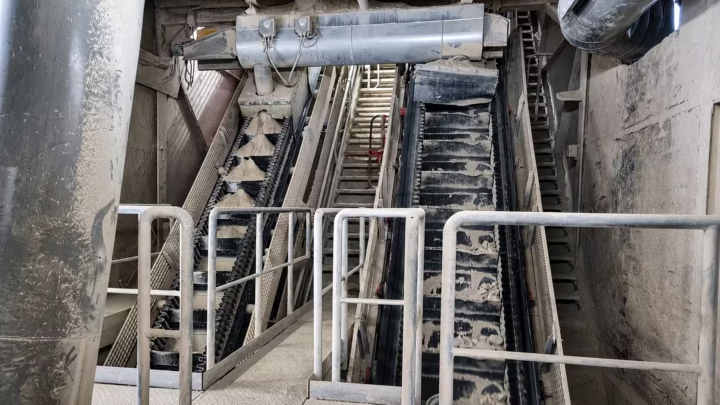
A customer once put a brochure on my desk with the word abrasion-resistant printed large across it. That was exactly the word he had bought on, for sharp-edged construction rubble. The belt came back after a few weeks, and across the surface almost nothing had worn away. The cover, though, was peppered with little notches and gouges, as if someone had jabbed at it with a knife. Abrasion-resistant the belt certainly was. Just against the wrong kind of load.

Abrasion-resistant is on every other brochure
Abrasion-resistant is a good word. It sounds like safety, and it appears on almost every quotation. It is not wrong, it just says very little about what the rubber is resistant to.
Abrasion-resistant means the rubber loses little material when something grinds across it. It is measured as volume loss in cubic millimetres, smaller being better, to ISO 4649, formerly DIN 53516. Fine quartz sand travelling over the cover is exactly this case. It acts like sandpaper, and against that an abrasion-resistant rubber genuinely helps.
Sharp-edged construction rubble is a different case. It does not grind, it cuts. A lump with a sharp edge presses into the cover and tears rubber out. No abrasion figure helps there. What helps is cut- and impact-resistance, which the standard even gives its own cover grade. Fine sand grinds, lumps cut. Those are two different rubbers, even when both brochures carry the same word.
Go by that word alone and the belt does not last the way you hoped, and the trouble shows up somewhere you never ordered it. So it pays to look inside the belt once before we get to the choosing. It is built more simply than its reputation suggests.
The layered build: carcass and cover
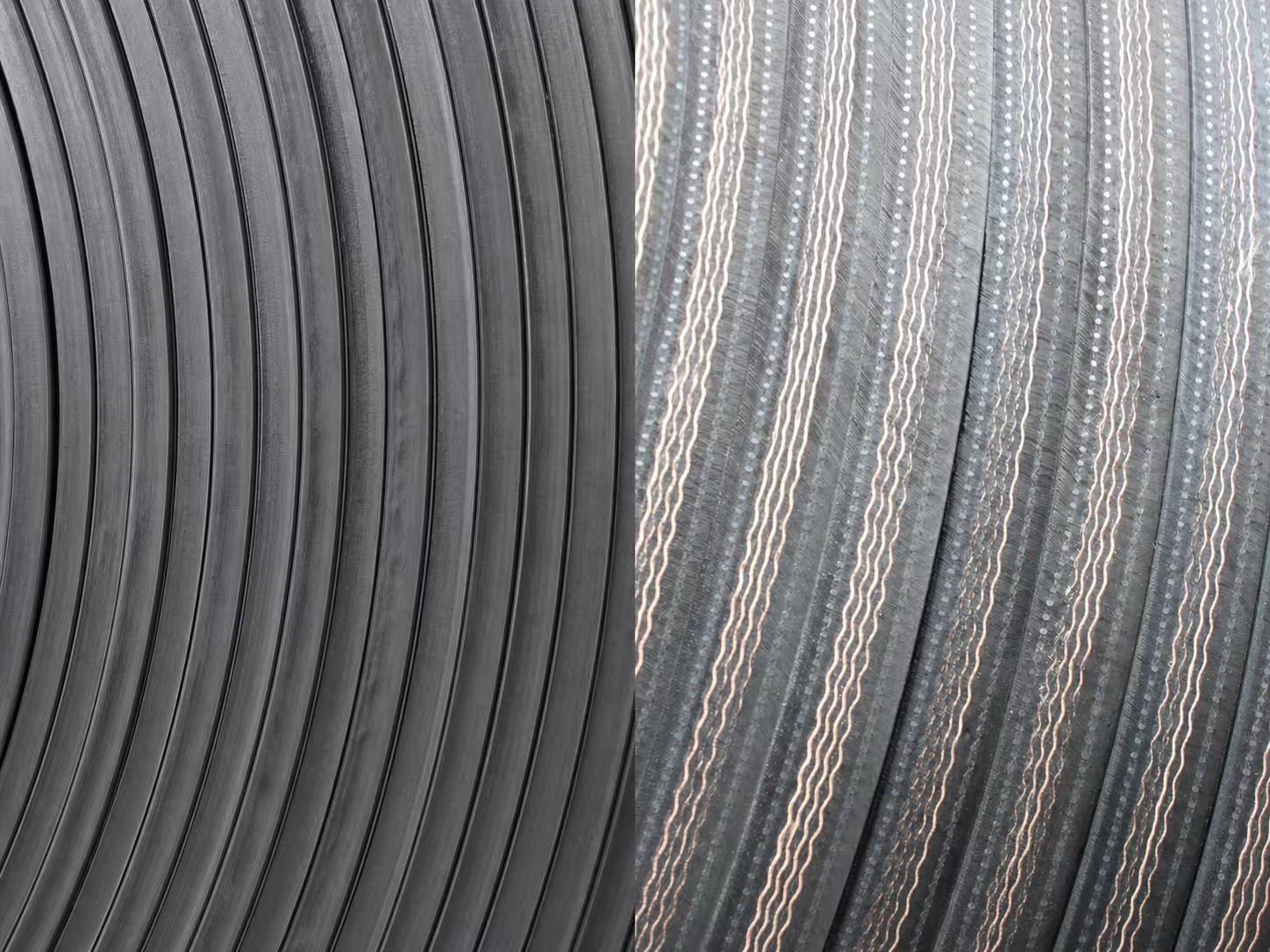
A rubber conveyor belt is a layered construction, basically a sandwich. Inside sits the carcass, the tension member made of one or more fabric plies with rubber between them. It takes up the pulling forces and holds the belt in shape. Outside sit the rubber covers, the carrying-side cover on top and the pulley-side cover underneath. They protect the carcass from wear, impact, moisture and chemicals. The cover is the belt’s wear layer: it takes the knocks so the expensive tension member comes through unharmed.
The carrying-side cover on top is thicker than the pulley-side cover underneath, and there is a reason for that. It takes the direct contact with the material, the impact during loading and the abrasion in daily running. The pulley-side cover only runs over pulleys and idlers; it needs padding, but less bulk.
How thick the carrying-side cover needs to be depends on how sharp and heavy the material is, the height it drops from and how often the belt is loaded. That thickness is no side issue. It is the belt’s real reserve of service life, because only once the top cover is worn through and the carcass lies exposed is the belt truly finished. How much cover rubber you need therefore follows the material, not the principle that more is always better.
The tension member: textile or steel cord, EP or nylon
At the tension member, the carcass, conveyor belt types split into two big families: textile plies and steel-cord plies. A steel-cord belt has a higher breaking strength than a textile belt, but it costs more and is more work to splice. For most plants in gravel, recycling or transhipment work, the textile belt is the normal case. You could write a whole separate article about textile versus steel cord in detail, with elongation, run tensions and take-up travel.
Among the textile belts you mostly meet two weave types, and this is where conveyor belt types get practical. EP is the standard: polyester in the running direction, polyamide, that is nylon, across it. This combination stretches little under load yet stays elastic across the width, with an operating elongation of about 1.5 to 3 percent (manufacturer data). That is why EP is the first choice for most plants.
The other type is the pure nylon belt, marked P or NN in the designations, where the threads in both directions of the fabric, lengthways and across, are polyamide. It shrugs off knocks and impacts better and is more elastic, but it stretches more under load than EP. More elongation means one thing: you need more take-up travel on the plant, so more adjustment range at the take-up unit that keeps the belt taut. Where impact loading dominates, that can pay off. Where low elongation matters, EP stays ahead.
The cover makes the character: rubber compounds
The carcass makes the belt strong. The character comes from the cover, or more precisely from the rubber compound it is made of. Whether a belt tolerates oil, withstands heat or stays elastic in frost is decided by the compound on top. A belt with the wrong compound hardens, swells, cracks or comes apart in layers, often long before abrasion even becomes the issue.
The multipurpose rubber belt has a cover of natural rubber (NR) or styrene-butadiene rubber, SBR for short, and handles normal service, as a rough guide from around minus 30 to plus 80 degrees Celsius in continuous operation. Outside that window the compound hardens or turns brittle, and the covers can delaminate. For sand, gravel and crushed stone at normal temperatures, this is the everyday belt.
Once oil or grease enters the picture, in recycling or timber processing for instance, it gets critical. Put a standard belt in contact with oil and the rubber soaks up the oil like a kitchen sponge, swells up and lifts away from the carcass. Against that you want an oil-resistant cover of nitrile rubber, NBR for short, which comes in grades from lightly oil-resistant up to versions for heavily oil-laden material. The catch is the cold: oil compounds are usually not recommended for low temperatures below minus 20 degrees.
For heat there are compounds of ethylene-propylene rubber, EPM or EPDM for short, with continuous ratings up to around 180 degrees and briefly up to 250 degrees (manufacturer data). The DIN 22102 scheme sets heat test classes at 120, 150 and 180 degrees test temperature. On paper you then have a nice maximum temperature. In service what counts is how the material brings the heat in: fine, hot material lies flat across the surface and heats the cover faster than coarse lumps do. A heat-resistant belt therefore takes less punishment with fines than the data sheet promises for lump material.
And then the cold. Abrasion-resistant standard belts stay elastic down to about minus 30 to minus 40 degrees, while dedicated low-temperature compounds reach working ranges down to minus 45 or even minus 60 degrees. An honest caveat belongs here: there is no internationally recognised test standard for cold resistance, and every manufacturer measures by its own method. Take these figures as a guide, not a guarantee. And where several properties have to come together, cold and oil-resistant at once for example, no standard compound will do: an ordinary oil or flame-retardant cover often gives out in frost as early as minus 20 degrees. Every added property costs you reserve somewhere else.

Abrasion grades: what W, X, Y and Z mean
Back to the brochure word. How abrasion-resistant a rubber really is can be measured, and for that there are grades. The core is the volume loss in the abrasion test, given in cubic millimetres. Smaller is better: the less rubber the test rubs away, the more abrasion-resistant the cover. The common DIN scheme has four standard grades.
| DIN grade | Abrasion, max | Character | Typical use |
|---|---|---|---|
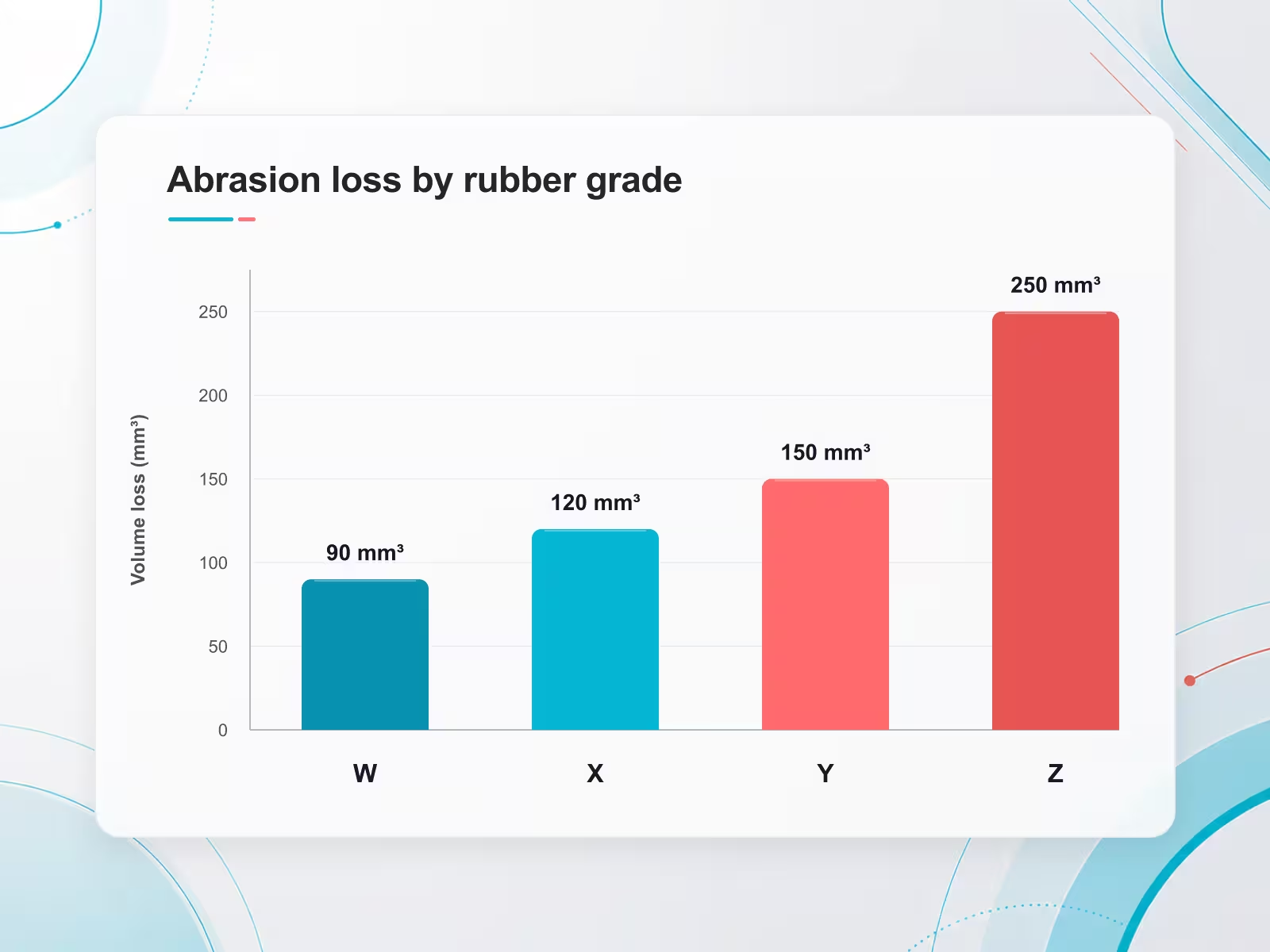
| W | 90 mm³ | best abrasion protection, slightly less strong than X | strongly abrasive material, sharp sand |
| X | 120 mm³ | versatile, also cut- and impact-resistant | coarse, sharp-edged material |
| Y | 150 mm³ | the standard grade for normal service | most applications |
| Z | 250 mm³ | the low-cost grade, light duty | light, barely abrasive material |
Keep the roles in mind: W is the abrasion champion with the smallest volume loss, but it has slightly lower strength than X. X is the versatile all-rounder, because on top of abrasion it also shrugs off cuts and impacts. Y is the standard grade for normal service, Z the cheap one for light duty. From W to Z the permitted abrasion nearly triples, from 90 to 250 cubic millimetres.
And with that, back to the customer with the construction rubble from the start. His material did not grind, it cut. The lowest abrasion figure in the world would have done him no good. What he needed was grade X, which stands up to cuts and impacts as well as abrasion. Abrasion-resistant was on the brochure. The right question would have been: resistant to what?
Beyond the four abrasion grades, the same standard marks special compounds with a letter: T for heat-resistant, G for oil-resistant, R for cold-resistant, E for antistatic, K for antistatic and flame-retardant at once, A for food-safe and C for chemical-resistant. The full scheme drawn from DIN, ISO and the American RMA classification is a science of its own; here the principle and the four grades are enough.
The edge: protected or cut
One detail many people only notice when it is too late: the edges. Along the longitudinal edges the carcass sits closest to the outside world. The standard is therefore a closed rubber edge running all the way round, which seals the fabric at the margins against wear, moisture and chemicals.
If instead a belt is cut lengthways from a wider web to the width you want, which is the normal case with belt bought by the metre, an open cut edge results. There the fabric of the carcass lies exposed, and moisture can work its way into the plies. Some of these edges are sealed after cutting, some stay open. And because a cut length has two open ends that still have to be joined into an endless belt, the edge question drags the next one straight in with it: how to splice the belt. That is a chapter of its own.
And then there is the thick full-rubber edge, a wide strip of rubber at the margin with no fabric reinforcement. It often gets ordered out of habit, because that is how it has always been done. At a sand plant a belt like that ran slightly off track for a few weeks, and the edge scraped against the steelwork on every pass. The unprotected rubber margin tore out in big chunks. A cut and sealed edge would have lost less at the same spot. The full-rubber edge brings no strength advantage, as the technical bulletin of one belt manufacturer states. When the belt mistracks it is, if anything, the more vulnerable option. Anyone running modern fabric usually does not need it any more.
Choosing the right type: by wear pattern, not by word
Now the threads can be pulled together. You choose the right rubber conveyor belt not by the word in the brochure but by the wear pattern of your material. And you read that pattern off two questions: how does the material load the surface, and in what environment does the belt run?
Ask yourself first whether the material grinds or cuts. Fine, abrasive sand calls for a low abrasion figure, so a cover in grade W or X. Fit the cheap Z grade here to save money and you build in a cover that wears away up to nearly three times as fast, 250 against 90 cubic millimetres in the test. The belt then wears through sooner, the carcass lies exposed, pulls in moisture and frays. What you save on the purchase is used up again by the first premature belt change.
The second question is the environment. If oil or grease travels with the material, you need NBR, or the belt swells. If the material is fed hot onto the belt, you need an EPM or EPDM compound, or the cover turns brittle. If it goes into frost, you need a low-temperature compound, or the rubber goes hard and cracks. The wrong compound rarely means only faster wear. Usually it means premature total failure, often on a Monday morning when the plant is meant to start up and the belt has already torn.
Choosing is above all an order of steps. First pin down the material and the environment, then settle the compound and the grade, then read the marking. And ask the plant, not the brochure: what did the last belt at this exact spot really cost, and why did it fail?
Once type and compound are fixed, the actual ordering begins: belt by the metre or a fabricated endless belt, that is one made to size and spliced into a loop, plus width, length, weight and the roll that has to be delivered, lifted and stored. There too you can save money or leave it on the table, but that belongs in the buying guide.
- A rubber conveyor belt is a sandwich of carcass (the tension member) and covers. The carcass carries, the cover protects and gives the belt its character.
- Abrasion-resistant describes only the resistance to grinding. Against sharp-edged, cutting material what counts is cut- and impact-resistance, a different property.
- At the tension member, EP (polyester and polyamide) is the standard; pure nylon (P or NN) shrugs off impacts better but stretches more. Steel cord is stronger, but dearer and more work to splice.
- The rubber compound decides oil, heat and cold suitability: SBR or NR for multipurpose, NBR for oil, EPM or EPDM for heat, special compounds for cold. Combinations cost you reserve.
- The abrasion grades W, X, Y and Z give the volume loss, smaller is better. W holds up best against abrasion, X is the versatile all-rounder, Y the standard, Z the low-cost grade.
- Choose by the wear pattern, not by the brochure adjective. Sort out material and environment first, then settle the compound and grade.
Frequently asked questions
What types of rubber conveyor belt are there?
Broadly by the tension member: textile belts and steel-cord belts. Among textile belts, EP (polyester in the running direction, polyamide across it) is the standard, alongside pure nylon belts (P or NN) with higher impact resistance and more elongation. Beyond the tension member, belts differ by the rubber compound of the cover (multipurpose, oil-, heat- or cold-resistant) and by the abrasion grade. The type is therefore always a combination of tension member, compound and grade.
What does abrasion-resistant really mean on a conveyor belt?
It means the cover rubber loses little material when something grinds across it, measured as volume loss in cubic millimetres to ISO 4649. That helps against abrasive material like fine sand. It says nothing, though, about resistance to cuts and impacts from sharp-edged material. Fine sand grinds, lumps cut, and that calls for other properties, in the standard a different cover grade.
When do I need an oil- or heat-resistant belt?
As soon as oil or grease comes into contact with the belt, in recycling or timber processing for instance, you need an oil-resistant NBR compound, or the standard rubber swells and comes apart. Heat-resistant belts of EPM or EPDM are due when hot material is fed onto the belt, with continuous ratings up to around 180 degrees Celsius (manufacturer data). Watch out, though: fine hot material heats the cover more than coarse lumps do, so build in some reserve here.
What do the abrasion grades W, X, Y and Z tell you?
They tell you how much rubber the abrasion test rubs away, in cubic millimetres, smaller is better. W holds up best against abrasion (90 at most) but is slightly less strong than X (120 at most), which also shrugs off cuts and impacts. Y is the standard grade for normal service (150 at most), Z the cheap grade for light duty (250 at most). The full standard scheme with all the special letters is a topic of its own.
Do I need a protected belt edge?
In most cases, yes. The closed rubber edge running all the way round seals the carcass at the margins against moisture and wear. With belt cut lengthways by the metre the edge stays open, and moisture can work into the fabric there; sealing the cut edge helps. Do not expect a strength advantage from a thick full-rubber edge; when the belt mistracks it is, if anything, the more vulnerable one.
The Conveyor Belt Calculator delivers cross-section, drive power and a belt recommendation as a starting point, free in the browser and without signing up.