At a cement works in the south, a wide belt ran flawlessly for months, until the plant went to full load over the summer. Then it slipped. The motor turned, the belt juddered, and the throughput collapsed. Everyone went looking at the belt: too old, too smooth, badly tensioned. But the cause sat a hand’s width to the side, on the drive pulley. Its lagging was ground smooth, slick as a worn car tyre with no tread left. Without grip on the pulley, the strongest motor transmits no force. We renewed the lagging, and the slipping was gone.
When the strongest motor is useless
A conveyor belt has no teeth and no chain. The drive pulley turns, and the belt moves only because there is enough friction between the two. That is the frictional drive, and it is the quiet condition for anything being moved at all. Take the friction away and the pulley spins under the belt while the motor works against nothing.
That is exactly what had happened at the cement works. The lagging was polished smooth after years of dusty, non-stop load, and with every glazed patch the friction dropped. At part load, what was left still did the job. At full load, when the belt needs the most force, it was over. Slip, the belt sliding on the pulley, is rarely the first suspect, yet it is one of the clearest wear signs a pulley can show.
For you that means: when a belt slips, look first at where the power is transmitted, not just at the belt itself. At the pulley, motor speed becomes belt speed, and that happens on nothing but friction.
Drive pulley, tail pulley and the rest
A conveyor carries more pulleys than most people suspect, and each has its job. Two carry the weight of the explanation.
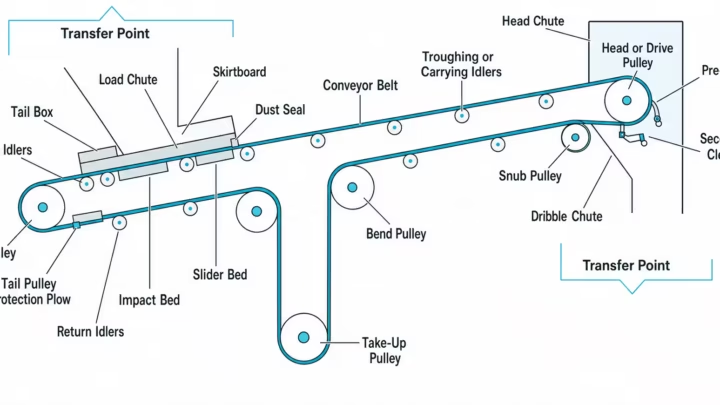
The drive pulley, often called the head pulley, usually sits at the discharge, where the material leaves the belt. It is coupled to the drive and transmits its power to the belt by frictional drive. It is the only pulley that actively drives the belt. All the others just turn with it.
The tail pulley, also called the bend pulley, sits at the opposite end and turns the belt around so it can run back on the underside. It drives nothing, it guides. Between them there can be more pulleys: a take-up pulley as part of the take-up unit, which keeps the belt taut, and snub pulleys, which turn the belt further or press it more firmly against the drive pulley. How far the belt runs around the drive pulley is its wrap: more wrap means more friction and with it more grip.
How all these parts add up to the anatomy of a conveyor is a subject of its own. Here the focus is on the pulleys themselves, and above all on what their surface can still do, or can no longer do.
The pulley lagging: where the grip comes from
The pulley lagging, in the trade simply the lagging, is the layer applied to the bare steel shell of the pulley. A bare steel shell would carry the belt well enough, but it would grip poorly and wear fast. The lagging changes that.
It has three jobs, and all three pay into the same pot. First, it raises the friction between pulley and belt, so the power actually arrives. Second, it protects the steel shell from wear and damage, because the lagging wears in place of the expensive pulley body. Third, it sheds water from the circumference, water that would otherwise sit like a film of grease between belt and pulley and drop the grip further still.
As long as the lagging grips, nobody gives it a thought. Once it has worn smooth, the belt no longer pulls, and even so, fault-finding usually starts at the belt.
Smooth, grooved, ceramic: which lagging goes where
Not every lagging belongs on every pulley. The choice depends on whether the pulley drives or only guides, and on how abrasive and wet the surroundings are. Four types turn up most often in the field.
| Lagging | Typical location | Why |
|---|---|---|
| Rubber, smooth | Non-driven pulleys (bend and deflection points) | Moderate grip, easy on the shell, cheap and uncomplicated |
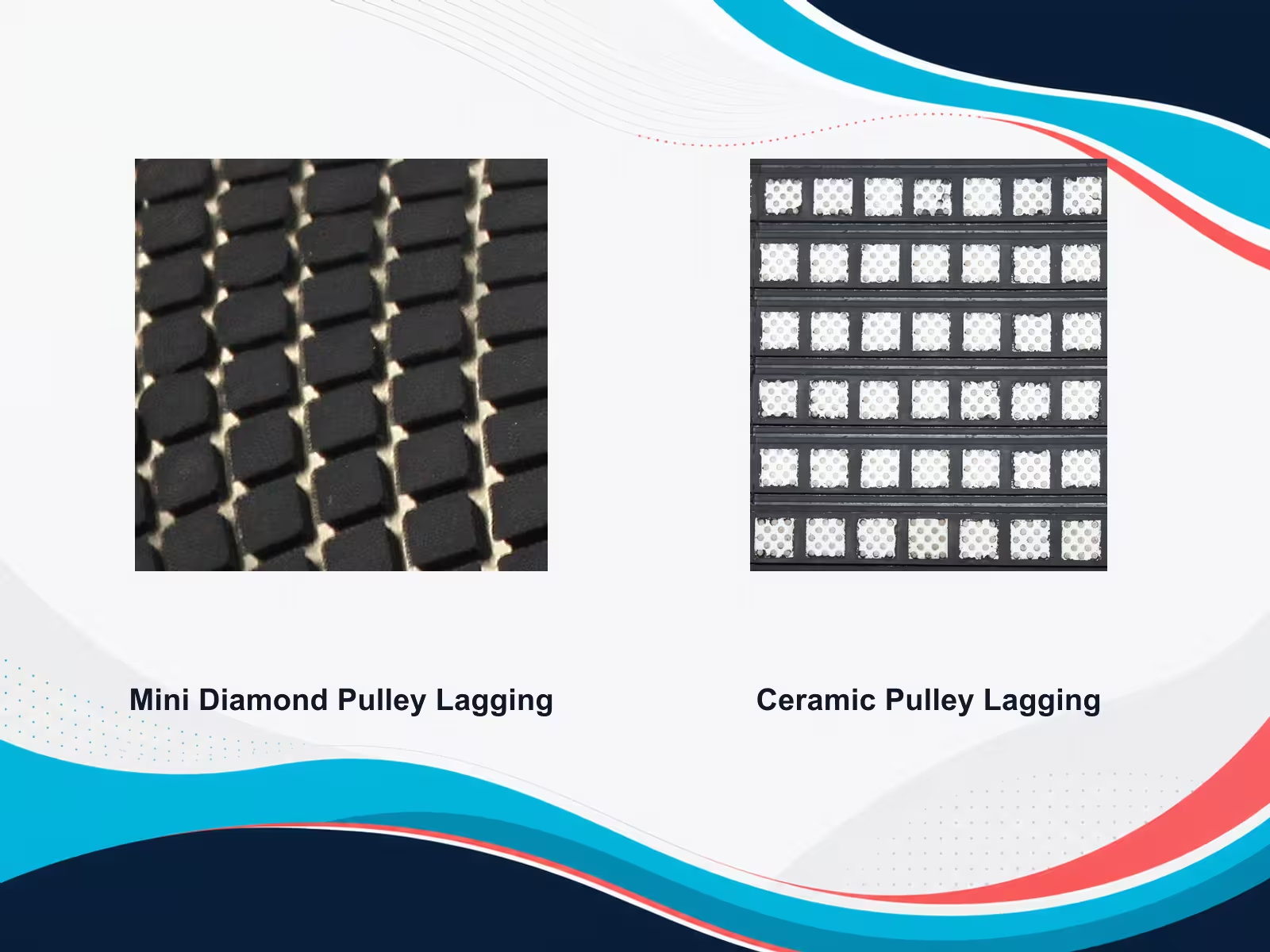
| Rubber with a diamond groove | Drive pulleys | More friction, sheds water, and the grooves give the lagging room to move under load |
| Ceramic, smooth | Non-driven pulleys in heavily abrasive conditions | Stands up to abrasion longer than rubber, without gripping aggressively |
| Ceramic with dimples | Standard for drive pulleys | Much more grip; take care where slip already exists, because then the dimples claw into the belt’s bottom cover |
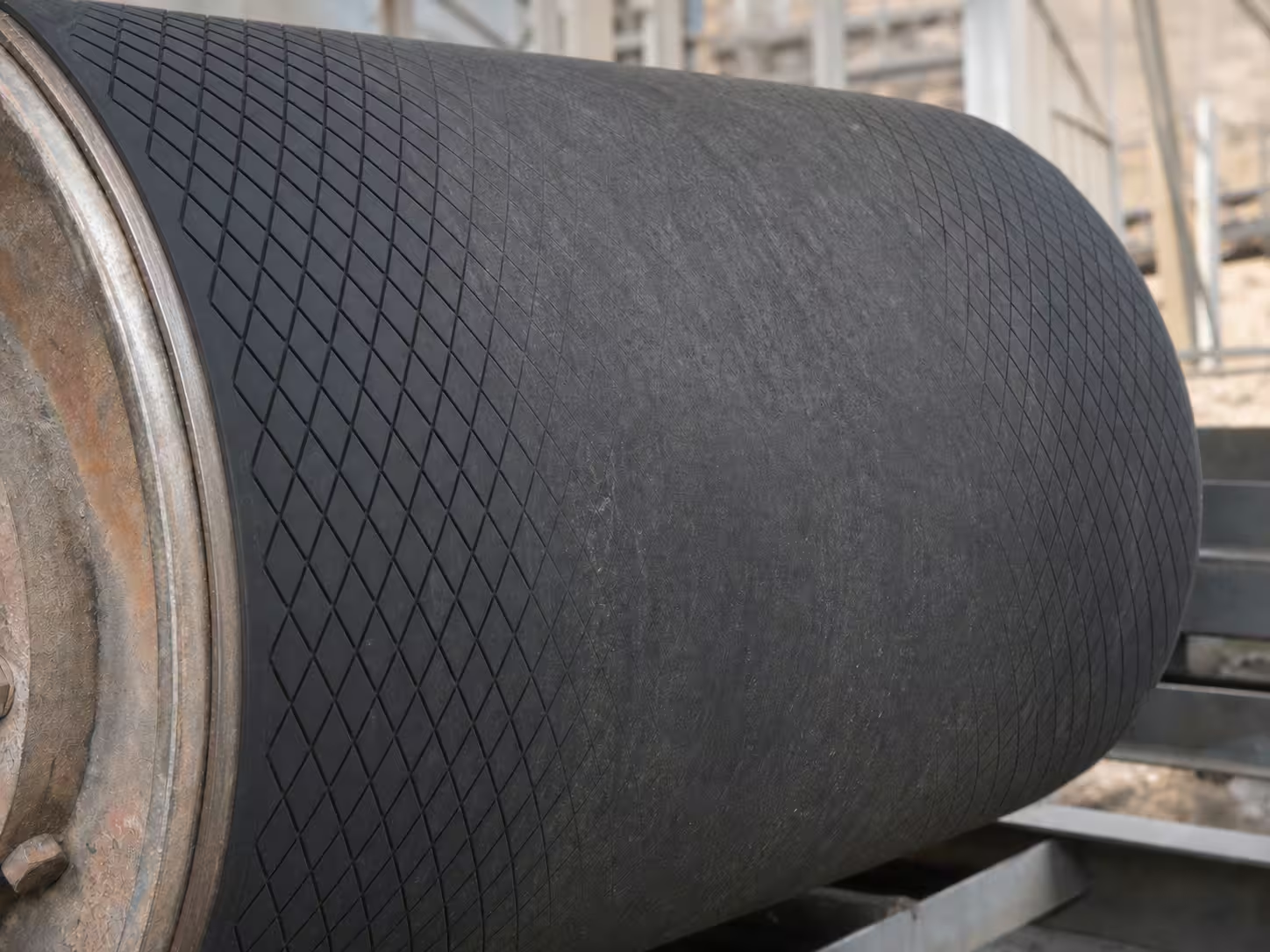
The diamond groove on the rubber lagging is more than decoration. The grooves work like the channels in a shoe sole: they give water and fines a way out, so the surface grips instead of floating on a film. In the process, the lagging also gets a bit of give and works under load without tearing straight away.
The ceramic version with dimples brings the most grip and is standard on many drive pulleys. But it comes with a catch you have to know about: if the belt is already slipping, the hard dimples dig into the belt’s bottom cover and can chew it up. Ceramic is therefore no cure-all for slip, but a choice for plants where the basic set-up is right.
Does ceramic really last longer?
The moment ceramic comes up, so does the question of service life, that is, how long a lagging lasts in operation. And here it pays to be honest. Makers advertise that a ceramic lagging lasts many times longer than rubber. The trouble is, the figures vary considerably: sometimes it is four times the service life, sometimes more than ten times. There is no neutral test value that settles it. Those are manufacturer figures, not a standard.
As a rough rule, hold on to this: ceramic lasts longer but costs more to buy. Whether it pays off hangs on your plant. In a heavily abrasive, wet setting with expensive downtime, the premium can pay for itself over just a few changes. Work it out over a few years, with the cost of every lagging change and the downtime each one brings. On a small, cleanly running plant the rubber lagging often does the job for years.
The premium for ceramic pays off where a rubber lagging would genuinely have to be changed too often. There is a second reason on top of that, one that has nothing to do with service life: wetness. A smooth rubber lagging loses grip in water and mud, and the belt starts to slip. Ceramic lagging still grips in those cases and is therefore fitted on many drive pulleys in wet surroundings. For service life, trust operations running similar material rather than the number in the brochure.
How to spot wear on the pulley
A pulley will tell you it is wearing, if you know where to look. The signs are unremarkable, but unmistakable.
The first is the slip we already know: the belt judders or slips under load, though the drive runs cleanly. The second you see on the lagging itself. Worn down, peeling away in places or polished smooth, it has lost its grip. A glazed lagging surface has a greasy shine, much like a well-used door handle, and that very shine is the warning.
Then the buildup. When material cakes onto the pulley shell, it forms an out-of-round, sticky layer that lifts the belt on every revolution and can push it off track. Material like that often comes from a transfer point that is not properly sealed at the sides and lets fines spill. And finally the scoring: visible running marks and grooves on the surface, usually dug in by foreign objects or a badly running belt edge.
Make the lagging a fixed part of your visual inspection. A careful look from a safe distance while the belt runs shows you the slip and the shine. Anything that needs a hand on it waits until the plant is shut down and locked out. However quick your hand is, the belt is quicker.
Slip often has a second cause: the tension
Now for the catch: not every slip comes from the lagging. A fresh, grippy lagging is no use if the belt runs too slack. With no tension, the belt lifts off the drive pulley and slips, no matter how well the lagging grips. Cause first, then symptom, or else you swap a perfectly good lagging and wonder why the slipping stays.
Tension is the job of the take-up unit. It holds the belt taut enough that no slip forms at the drive pulley and the sag between the idler sets stays within limits. Run a belt too slack and it slips at the pulley under load, like a V-belt tensioned too loosely that spins on its pulley instead of taking it along.
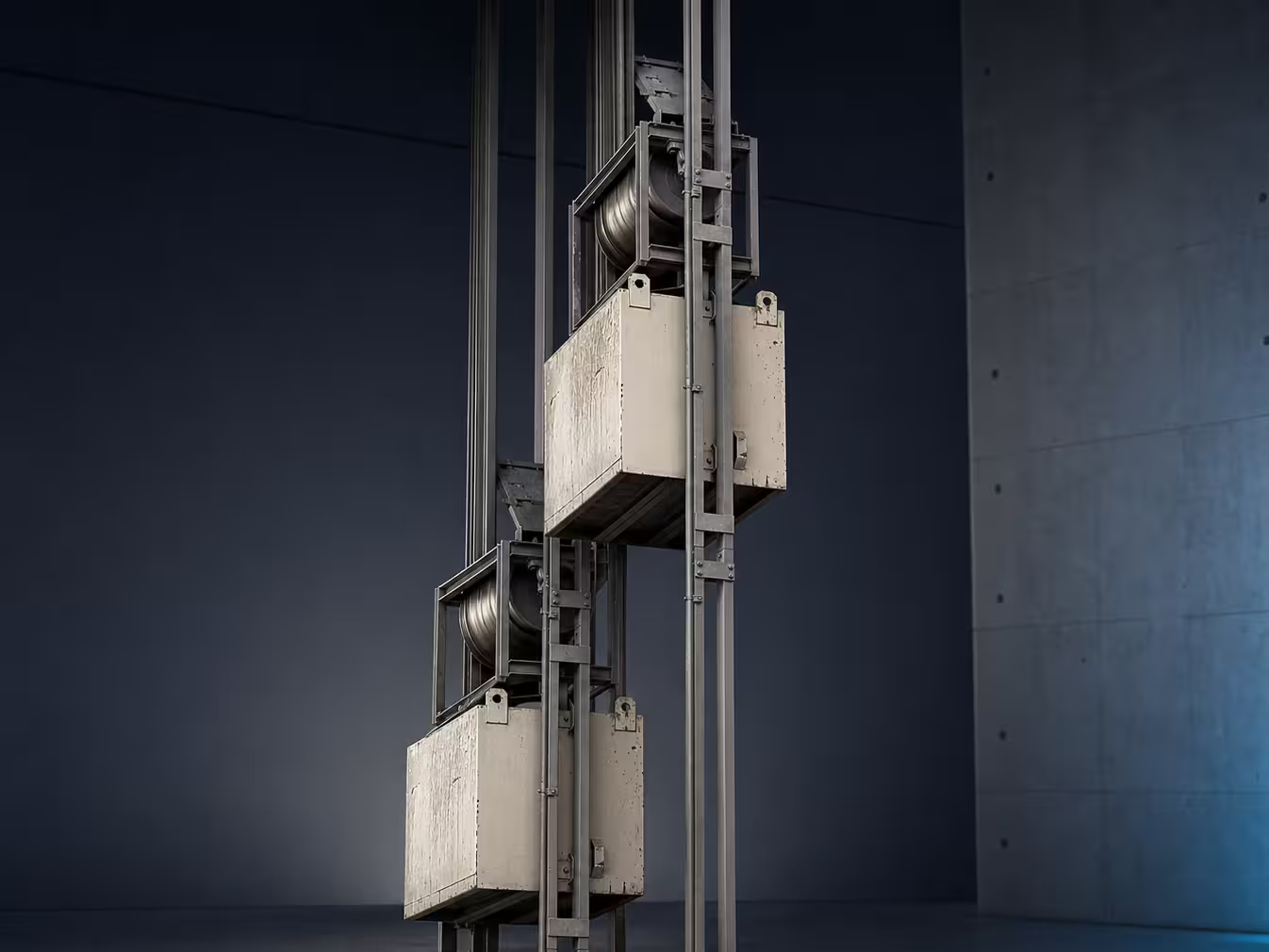
Two designs are common. The screw take-up, STU for short, tensions the belt by hand with threaded rods at the tail pulley. It is simple and cheap and, as a rule of thumb, does the job for shorter belts under about a hundred metres. The gravity take-up, the GTU, holds the tension constant automatically by a weight, even as the belt stretches under load. For long conveyors over a hundred metres it is the better choice. The hundred metres are a rough guide, not a hard limit.
So before you suspect a lagging, check the take-up travel. If the take-up sits at its stop or the belt sags visibly, you may have found your culprit already, without so much as touching the pulley.
Re-lag the pulley or replace it
Once it is settled that the pulley is to blame, the cost question follows: is a new lagging enough, or does the whole pulley have to come out? In most cases the answer is pleasingly cheap. If only the lagging is worn, the pulley is re-lagged, that is, given new rubber or ceramic, and the pulley body with its shaft and bearings stays put.
The whole pulley is only due when something deeper has failed: a bearing failure, a bent or cracked shaft, a damaged shell or an imbalance that sets the belt shaking. That is the bigger job, because then the alignment usually has to be redone as well.
The economics are the same as with almost any wear part on the belt. The lagging is cheap next to a pulley swap, and the planned lagging change is cheap next to the unplanned downtime that a slipping or seized drive causes. Which part on the belt gives out first, and what each swap really costs, is a chapter of its own. For the pulley, the short version is: watch the lagging, renew it in good time, and the pulley body often lasts many times longer.
- The drive pulley drives the belt by frictional drive, the tail pulley guides the return run. With no grip on the pulley, no motor transmits any force.
- The pulley lagging brings the grip, protects the steel shell and sheds water. If it is missing or run smooth, the belt slips.
- Lagging choice: smooth rubber for non-driven pulleys, rubber with a diamond groove for the drive, smooth ceramic for abrasive conditions, dimpled ceramic as the high-grip standard for drives.
- Ceramic lasts many times longer than rubber according to makers (a span of four to more than ten times, no fixed figure) and costs more. Whether it is worth it depends on material, wetness and downtime cost.
- Wear signs on the pulley: slip, worn or peeling lagging, a polished-smooth surface, buildup, scoring.
- Not every slip is lagging wear. Check the belt tension (take-up) first, before you swap the lagging.
- Usually re-lagging is enough. The whole pulley only on bearing, shaft or shell damage, or on imbalance.
Frequently asked questions
What is the difference between a drive pulley and a tail pulley?
The drive pulley, usually at the discharge, is coupled to the drive and transmits its power to the belt by frictional drive. It drives the belt. The tail pulley at the far end only turns the belt around and guides the return run; it drives nothing. Driving versus guiding, that is the core difference.
What does pulley lagging do?
Pulley lagging, also called lagging, is the rubber or ceramic layer on the pulley shell. It raises the friction between pulley and belt so the drive power arrives, it protects the steel shell from wear, and it sheds water that would otherwise act like a film of grease and cut the grip.
Why does my conveyor belt slip on the drive pulley?
Two causes are the most common. First, a worn, polished-smooth lagging with no grip. Second, too little belt tension: run the belt too slack and it lifts off the pulley and slips, however good the lagging is. So check the lagging and the take-up travel before you go looking at the drive.
Does ceramic lagging last longer than rubber lagging?
According to manufacturer data, yes, usually many times longer. The spans run from about four times to more than ten times the service life, but there is no neutral test value for it. Ceramic costs more to buy. Whether it is worth it is decided by your material, the wetness and the price of a stoppage, not the brochure.
Do I have to replace the whole pulley when the lagging is worn?
Usually not. If only the lagging is worn, the pulley is re-lagged while the body, shaft and bearings stay. The whole pulley is only due on bearing, shaft or shell damage, or on an imbalance. Re-lagging is the smaller and far cheaper job.
The Conveyor Belt Calculator works through the motion resistances and drive power of your installation, free in the browser and without signing up.