A young colleague from maintenance once cornered me at his plant, years back, wanting to know which part on a conveyor gives out first. What he really wanted was a list, he said, with part numbers, to learn by heart. I gave him a different answer. Follow the order in which things wear, I told him. Then you know where to look first, and where to keep hold of your money.
The question that saves money: what breaks first?
Wanting to know the one part that fails first is understandable. It just leads you in the wrong direction. A conveyor is made up of many components, and they do not give way at the same time. They give way one after another, in an order that looks much the same from one operation to the next. Know that order and you no longer have to guess.
The principle behind it is simple. The parts that speak up first are the ones in the most direct contact with the material and the ones that cost the least. They are the plant’s wear buffer, the way the grinding wheel at a workbench is gone long before the machine behind it. On almost every plant the belt is the most expensive single part, and it lasts longest as long as the rest is looked after. That is where the money sits. Ignore the small conveyor belt spare parts and in the end it is the big, expensive belt that fails too early.
The order of wear: from the idler to the splice
When I walk into a plant I do not know and want a sense of how it is doing, I run through this order in my head. It is not a standard, just experience gathered across a lot of plants. In your operation a stage may move up the list or drop down it, depending on the material, the load and the surroundings. As a signpost it holds up all the same.
- Idlers and return idlers. They turn day and night, and their bearing is the most delicate and the most expensive thing about them. Buildup, moisture and dust wear it down until the roller runs heavy or seizes.
- Scraper blades. They sit under pressure right against the running belt and shave off what it will not let go of after the discharge, known as carryback. That they wear down is not a fault, it is their job.
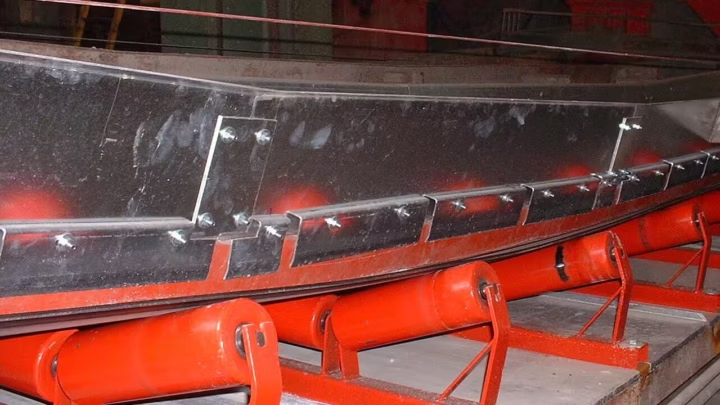
- The skirt seals on the skirting. At the loading point, where the conveyed material comes onto the belt, they rub against the belt and the material without let-up, and they wear thin.
- Belt edges. They are the belt’s early warning. If it runs off track or rubs against the structure, the edge is the first thing to fray.
- Pulleys and their lagging. The lagging gives the grip between pulley and belt, and over time it wears smooth until the drive starts to slip.
- Take-up components. They hold the belt tension and do their job the most unobtrusively of all, which is why nobody notices them going slack until late.
One part is missing from that list on purpose: the belt splice. It does not wear slowly like the rest. It holds and holds, and then it fails all at once. Why that one part makes all the difference is what we look at next.

Failing often does not mean failing expensively
Here a lot of people make the same mistake. They tend to the thing that breaks most often and miss the thing that fails most expensively. Those are two different things.
What wears often makes noise. A roller grinds, a blade lets carryback through, a seal leaks material out the side. You notice it, and you change it. What rarely fails makes no noise. It does damage. A US industry source names splice failure as the most common cause of catastrophic belt breaks. A splice like that does not tear slowly. It holds for years, and then it springs open like a zip that jams at one spot and lets go completely the next moment.
| Component | How it wears | What its failure means |
|---|---|---|
| Idler | Often and visibly, announces itself through noise | Replaced singly and on schedule, cheap |
| Scraper blade | Often, direct material contact | Quick to change, low parts cost |
| Skirt seal on the skirting | Often, rubs on belt and material | Adjustable or replaced by the metre |
| Belt splice | Rarely, with no slow run-up | Most common cause of catastrophic belt breaks, long downtime |
| Conveyor belt | Slowly, if the rest is looked after | Most expensive single part, involved replacement |
The lesson is not to neglect the small parts. Quite the opposite. Because the expensive failures come rarely and without warning, tending the cheap parts is the only early warning you get at all. Listen to the rollers and check the blades, and you notice long in advance that something on the plant is off.
Why the cheap part saves the expensive one
Scale that up to a full year. An idler bought as a planned spare part costs a fraction of what an hour of unplanned downtime swallows. In large operations, downtime costs quickly run into the high four- to five-figure range per hour, according to international industry sources. Add to that, when something really breaks, the emergency premium for the weekend shift, the knock-on damage to neighbouring parts and the repair itself. The exact figures come from US sources and are orders of magnitude, not a price list. The direction holds in any currency.
It works like the brake pads on a car. A set of pads costs little and is quick to change. Run them down to the metal and you ruin the brake disc, which costs many times as much. Nobody would dream of saving on the pads only to wreck the disc sooner. On the conveyor, that is exactly what happens, and more often than you would think.
Otherwise it costs you twice, once for the part and once for the downtime. And the downtime is nearly always the dearer of the two. Changing a roller, a blade or a skirt seal on schedule costs little by comparison and prevents exactly that failure.
The causes behind the wear
Why does the order look the way it does? Because the same causes strike the same parts over and over. Five of them turn up especially often.
Dust and dirt creep into every bearing and under every seal. Mistracking shoves the belt against the structure and eats it away from the edge in. Moist, sticky material bakes onto rollers and pulleys and brings weight to places where none belongs. Overload bears down on everything at once. And maintenance intervals stretched too long give a small fault the time it needs to grow into a big one. Most of the time several of these work together, and the weakest part gives way first.
The good news is that most of these parts give notice. A bearing on its way out gets loud and runs heavy long before it locks up. Between the first signs you can pick up (the noise, the heavy running, the vibration) and the total failure, there are often two to six weeks, according to an industry source. That is enough time to order the roller without any rush and fit it at the next planned stop, rather than turning out at night with a crane. The plant tells you what is wrong, as long as you regularly stop for a moment on your walk-round, listen and look.
The right spare-parts enquiry: two photos, three measurements
At some point, for all your care, a new purchase comes due, and then your enquiry decides the quote you get back. A good enquiry gets a part that fits. A patchy one gets follow-up questions, the nearest catalogue match or the wrong part. If you want to buy conveyor belt spare parts without grabbing the wrong thing on the first attempt, send the supplier the following.
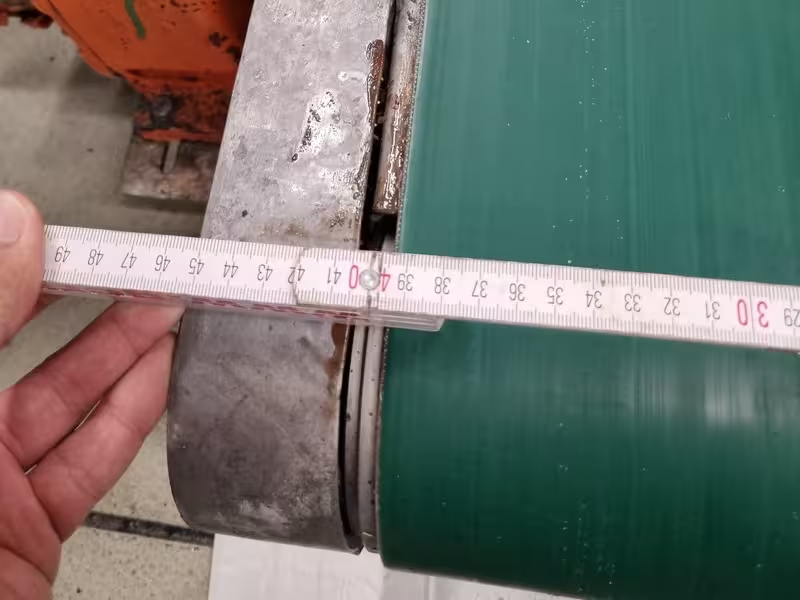
- belt width in millimetres and, if you know it, the belt speed
- the conveyed material and its properties: dry, moist, sticky, abrasive, sharp-edged, warm
- where the part sits: head or tail pulley, carrying run or return run, loading or transfer point
- the existing part type, if possible with a photo of the nameplate
- a photo of the installation space, not just of the part
- the operating environment: wet, dusty, hot, oily, with food contact or in a hazardous area, meaning a potentially explosive atmosphere
- the result you want and your downtime window
The photos matter more than most people think. A picture of the installation space answers questions nobody thinks to ask over the phone. How much room is there under the pulley? Can the fitter even get at the take-up? Will the length fit? An enquiry with no photos and no measurements is like ordering work boots over the phone without giving your size. Something turns up. Whether it fits is down to luck.
If you cannot pull the belt speed or the plant data together reliably on your own, a conveyor belt calculator gives you a first rough estimate to build the enquiry around. The rest is little effort. It is the half hour you save yourself the next time the plant stands still.
Repair or replace
When do you repair, when do you replace? With the small parts the answer is usually easy. A seized idler comes out straight away, no argument, because it scours the belt deeper in one single spot for as long as it stays in. Rollers can be swapped one at a time, which makes them the cheapest planned spare-parts job there is. Blades and skirt seals are the same story: change it, run on, done.
With the belt you are in a different league. A small damaged patch can be repaired with a repair strip or by hot vulcanising, and often that is the sensible call. Only wholesale cover loss, cracks running right through or damage in the carcass often call for a full replacement, or at least for a let-in section. A full replacement is the most involved single job on the whole plant, because pulling in a new belt and splicing it both mean downtime. Which is exactly why it pays to put it off as long as you can by looking after the small parts.
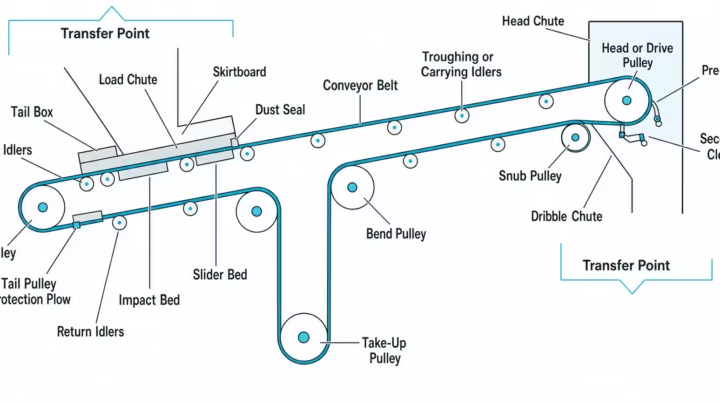
If you want to know which component does which job and how to spot its wear in detail, you will find it in the overview of how a conveyor belt is put together. This article stays with the order of wear and the money.
- Conveyor belt spare parts wear in a reliable order: idlers and scraper blades first, then skirt seals, belt edges, pulleys with their lagging and last of all the take-up components. The belt lasts longest.
- What wears most often is not the same as what fails most expensively. Rollers and blades go often and cheaply; the belt splice goes rarely and catastrophically.
- The cheap part, changed on schedule, heads off the expensive, unplanned knock-on damage. The downtime almost always costs more than the part.
- Most parts give notice. A bearing failure often gives two to six weeks of warning, according to an industry source, as long as you listen and look on a regular basis.
- A good spare-parts enquiry names the belt width, the conveyed material, the installation point and the environment, and sends two photos with it. That saves follow-up questions and wrong orders.
- Change small parts at once, repair the belt for as long as you can, and replace it in full only when the carcass is damaged.
Frequently asked questions
Which conveyor belt spare parts wear out fastest?
The parts in direct contact with the material speak up first: idlers and return idlers, scraper blades and the skirt seals on the skirting. After them come the belt edges, the pulley lagging and the take-up components. The belt itself lasts longest, as long as the small wear parts are changed in good time. This order is experience from many plants, not a standard.
How can I tell that a part is about to fail?
Most wear parts give notice. A roller gets loud and runs heavy before its bearing seizes; there are often two to six weeks between the first signs you can pick up and total failure, according to an industry source. A blunt scraper blade lets more carryback through, a tired seal leaks material out the side. Look and listen for a moment on every walk-round, and you see the failure coming.
Which costs more, the part or the downtime?
Almost always the downtime. A small wear part like an idler costs a fraction of what an hour of unplanned downtime swallows in a large operation; international industry sources put that in the high four- to five-figure range per hour. That is why the cheap part, changed on schedule, saves you the expensive, unplanned failure.
What details does the supplier need for a spare-parts enquiry?
The most important are the belt width, the conveyed material with its properties, where the part sits and the operating environment, plus the belt speed and the existing part type where you can get them. Two photos, one of the part or its nameplate and one of the installation space, save most of the follow-up questions. The more complete the enquiry, the sooner the right spare part arrives.
Should I keep wear parts in stock?
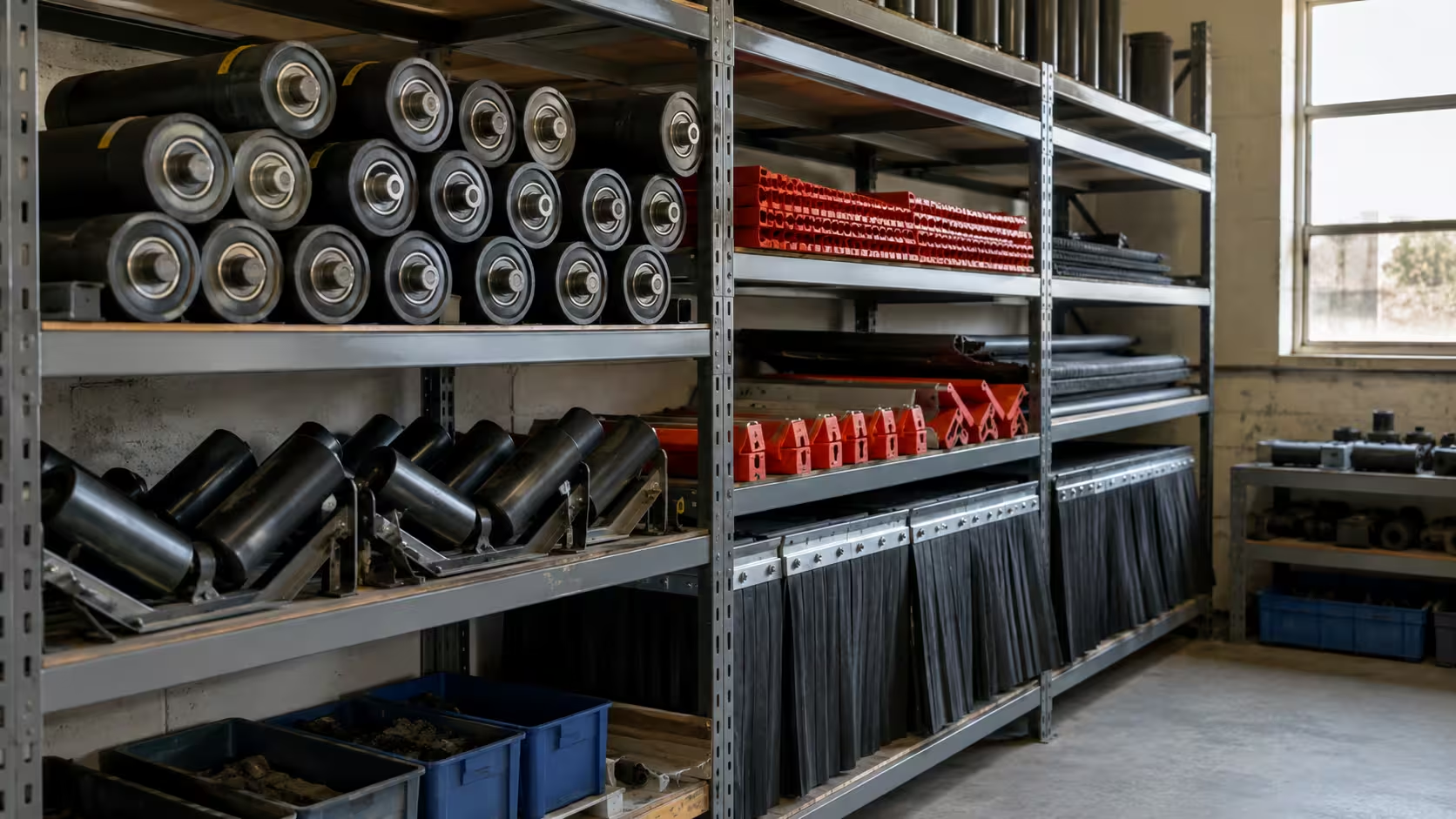
For the small, predictable parts a small stock nearly always pays: a handful of idlers, a set of scraper blades, skirting rubber by the metre. This kind of conveyor accessory is cheap, wears out predictably, and its absence when it matters costs you downtime. With the expensive belt the sums look different. There, the exact specification for a fast reorder is usually worth more than a full shelf.
The Conveyor Belt Calculator gives you cross-section, belt speed and drive power, free in the browser and without signing up.