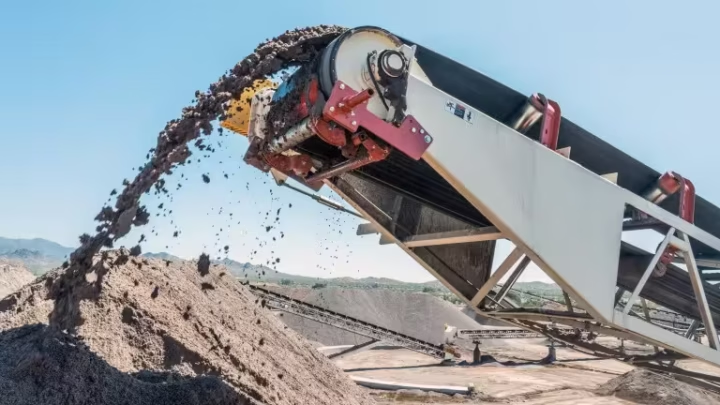
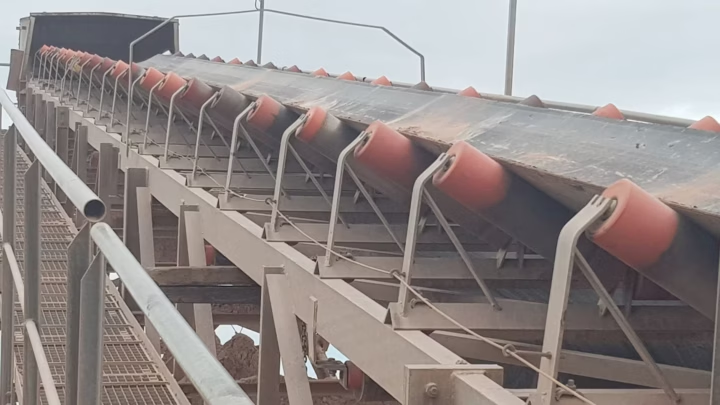
At a cement works where I often had work, the same cone of fines sat under the head pulley every morning. Someone on the early shift shovelled it away before the boss showed up, and nobody counted it as a problem. It was part of the morning, like making the coffee. Yet that cone was no act of nature. It was carryback: material that had not jumped clear at the discharge point but stayed stuck to the belt, rode round the pulley with it and only dropped off underneath, on the return run.
Carryback: the material that keeps coming back
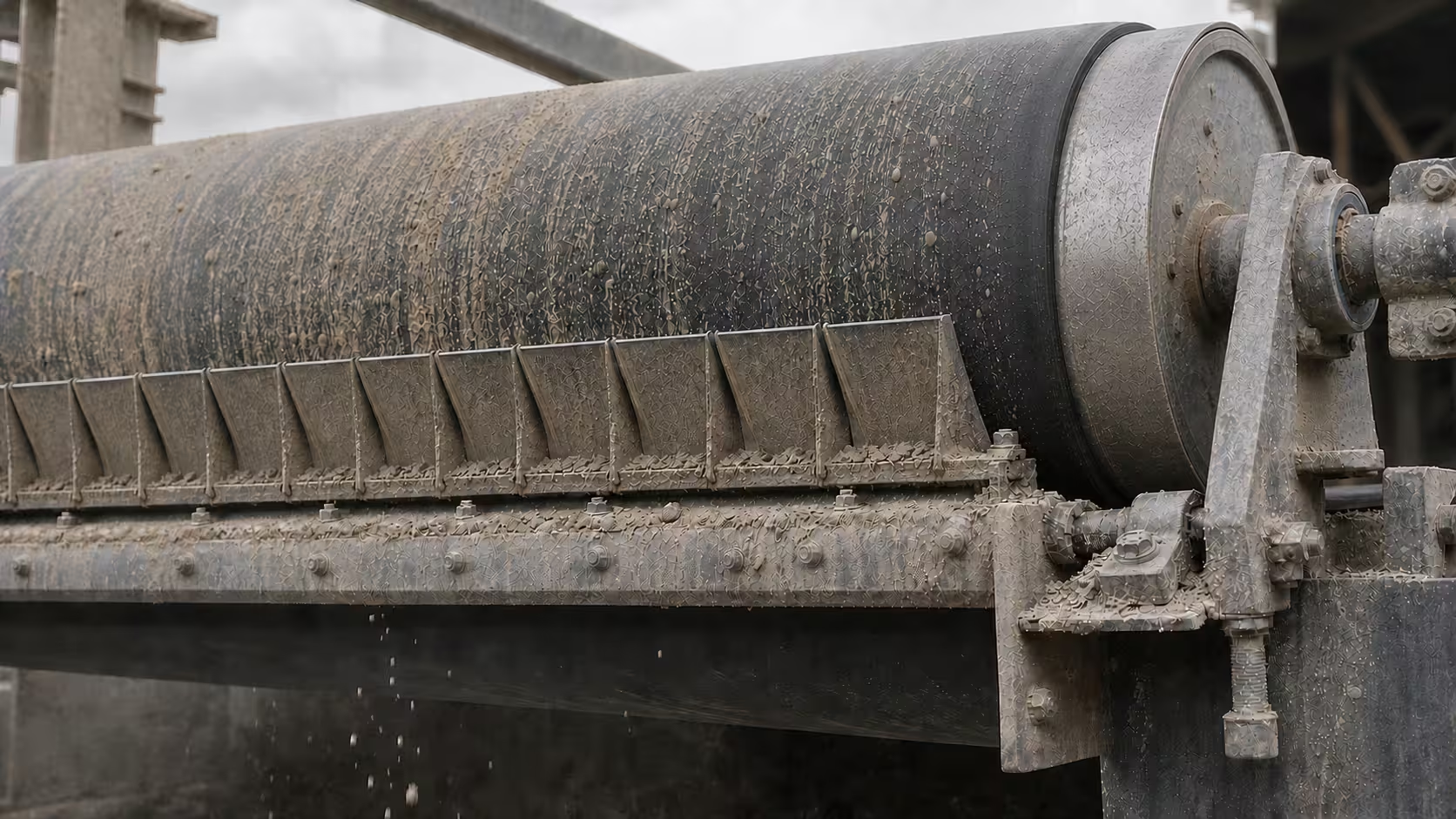
Carryback is the part of the load that does not jump clear at the discharge point but stays stuck to the belt and rides back with it. Along the way it settles wherever nobody wants it: on the return idlers, on the pulleys, in the steelwork and on the floor under the plant. So a conveyor belt has an awkward habit that no brochure likes to mention. It brings back a share of what it has just delivered.
Per revolution it is next to nothing. A gram here, a handful there, hardly worth mentioning. But a belt does not run one lap, it runs day and night, and the little bit per lap grows into a ridge by the week. Three percent sounds harmless. It is the dripping tap of conveyor technology: nothing on its own, but added up over a year it is a line item you notice. One maker of cleaning systems puts the loss from spillage, dust and carryback on a plant without effective cleaning at up to 3 percent of the total throughput. That is manufacturer data, not a verified standard, but it shows the order of magnitude.
That is exactly what makes carryback so treacherous. Early on it hurts nobody. The plant keeps running, the cone under the pulley gets cleared in the morning, and the bill arrives later. Cleaning a conveyor belt is therefore not a matter of going round now and then with a broom under the plant. It means stopping the carryback where it starts, which is at the discharge point.
What unchecked carryback really does
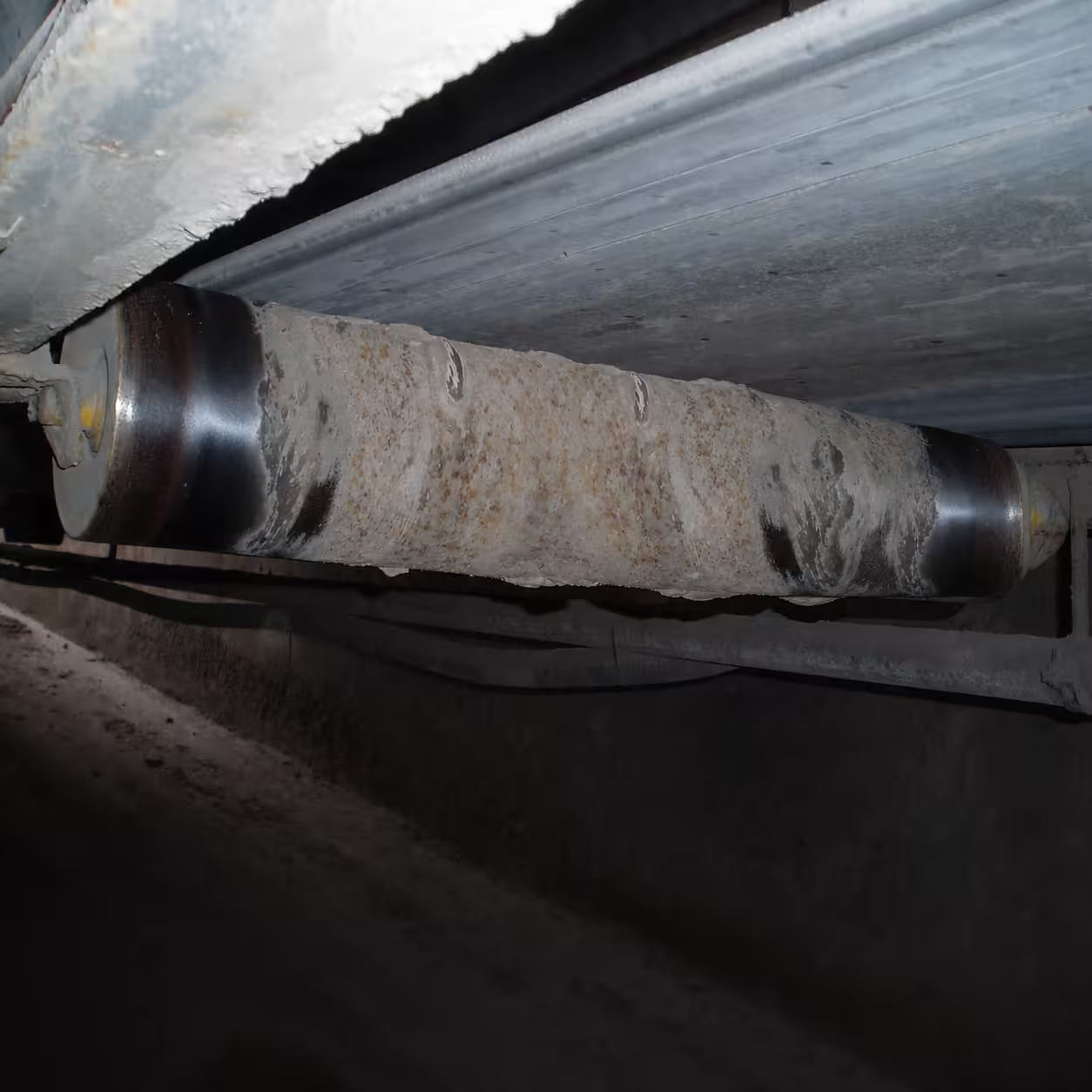
On a long belt at a bulk-handling operation I had on my books for a while, the return idlers kept failing for months. Everyone blamed poor bearings and dutifully swapped them out. The real cause lay somewhere else. A badly set scraper was letting fines through; they stuck to the carrying side, rode back along the return run and loaded onto the idlers lap after lap until the bearings seized. The bearings were not the problem. The belt was coming back dirty. Wet fines on a cold return idler behave like dough on a rolling pin: they cling, they bake on, and they grow with every revolution.
Just how much material that adds up to becomes clear from a sober sum. Around 100 grams of carryback per square metre still counts as an acceptable level; the figure comes from a US mining authority and circulates in the trade by way of a manufacturer. A handful of sand per square metre sounds like nothing. On a belt 1,200 millimetres wide running at 2 metres per second around the clock, it still comes to around 7 tonnes a day that want sweeping up from under the plant. And that is the case that passes for clean.
The consequences do not stop at clean-up time. Carryback raises the friction at the rollers, which kills the bearings sooner, and it likes to build up on one side. Then the belt runs off track, and a cleaning problem turns into mistracking with all the knock-on damage that hangs off it. A German opencast lignite mining company once analysed its idler replacements: around three in ten of the return idlers it changed could be traced back to escaped material, not to normal ageing. Every one of those swaps costs parts, fitter hours and usually downtime. The link between a clean belt and a long-lived idler is no theory. It is written into every maintenance log where someone separates the causes honestly.
One manufacturer reckons carryback is behind around 85 percent of all maintenance problems on conveyor systems. That is an in-house ballpark figure, not an independent study, and I would not trust it to the decimal place. But the direction matches what you see out in the field. Where it is dusty under the belt and the rollers clog up, half the maintenance crew is busy cleaning up after a problem that starts at the discharge point.
Cleaning is a concept, not a single scraper
A gypsum plant I was called out to several times had everything the catalogue offers: two scrapers, a brush roller and a water spray bar. And still the carryback coated half the car park in dust. Wet gypsum clings, and in winter the spray bar was out of action anyway because it froze up. The reflex was always the same: we need another scraper. But a second scraper against wet gypsum is like a stronger hairdryer against wet cement. The direction is right, the physics is not.
In the end no extra component fixed it, but a realisation did: you have to dry the belt before cleaning and enclose the cleaning area, with an air knife and extraction. Only then do the scrapers really bite. The dust on the car park was the smaller problem. The bigger one was the air the people beside it were breathing all day.
That is the crux of it. No cleaning system reaches a hundred percent, the trade agrees, because neither the belt surface nor the blade edge is flawless. So you do not solve the problem with one oversized scraper but with a chain of matched steps, each doing its part. Cleaning a belt is system work, not parts-swapping. Once that has sunk in, you stop simply ordering the next blade every time.
The building blocks of a cleaning system
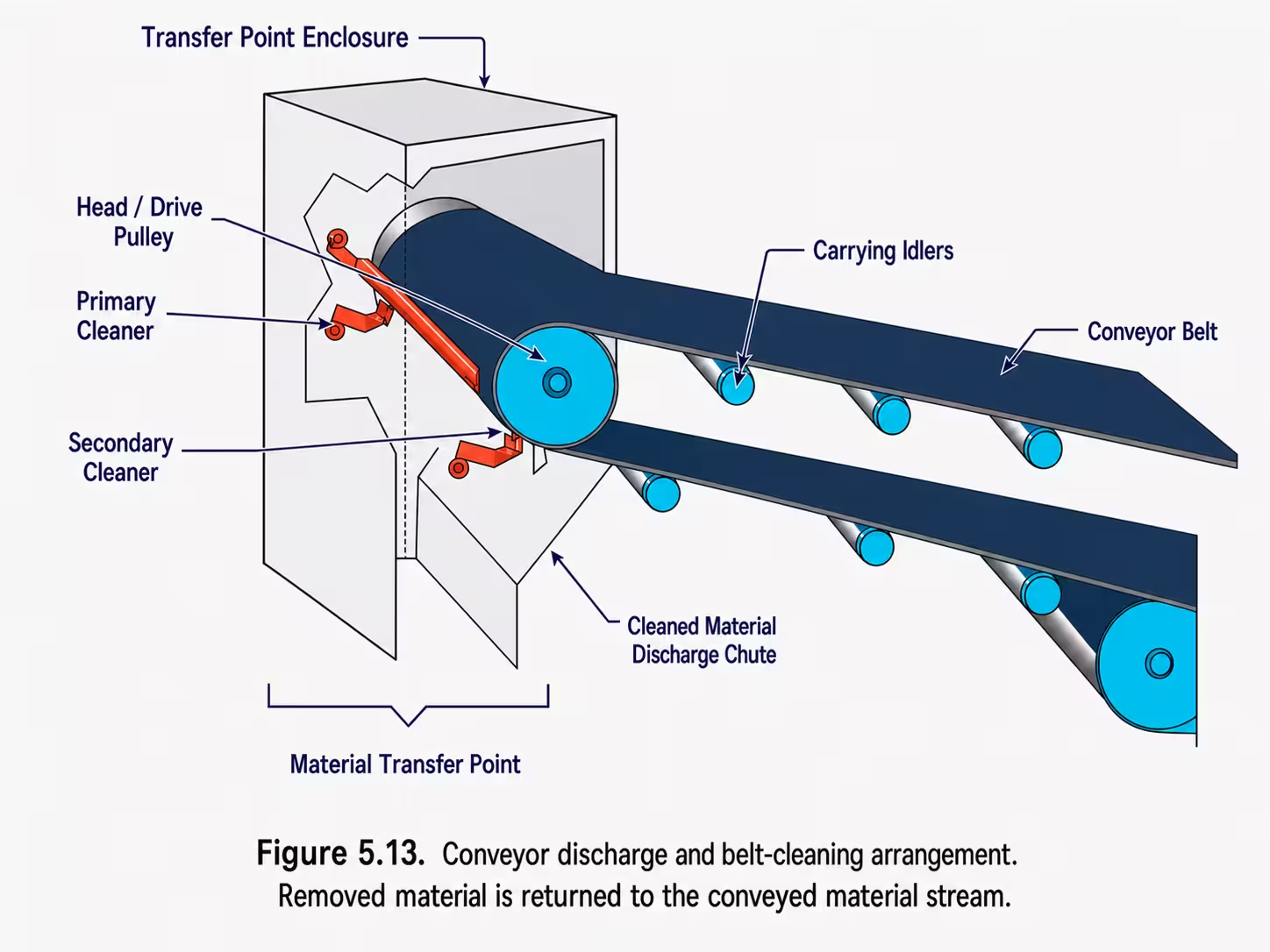
A cleaning system is no black art. It is a handful of building blocks, each with a clear job, and only together do they get the belt clean. In catalogues the bladed parts go by belt cleaner or belt scraper. On a conveyor they always mean the same thing: an element that relieves the belt of what it will not give up on its own. Which design and which blade material fit in detail is a topic of its own.
| Building block | Where it sits | Its job in the system |
|---|---|---|
| Primary scraper (pre-cleaner) | At the head pulley, right at the discharge point | Takes off the coarse fraction in one pass, so the fine cleaning does not have to carry everything alone |
| Secondary cleaner | Behind the head pulley, at the start of the return run | Picks up the fine remnants the pre-cleaner misses, built for precision rather than force |
| Brush cleaner | Usually behind the head pulley | Rotating nylon brush for fine, sticky or dusty material such as coal, sugar or transhipment goods |
| Water or air knife | Inside the enclosed cleaning area | Loosens or blows off clinging fine dust where rigid blades are beaten by the moisture |
| Return-belt plough (V-plough) | On the inside of the belt, just ahead of the tail pulley | Clears material off the inside before it gets between belt and pulley and causes damage there |
What decides it is the interplay, not the single part. Two trade portals arrive independently at the same finding: a pre-cleaner on its own does not get the belt clean; only the combination of primary and secondary scraper lifts the cleaning performance above 90 percent. The pre-cleaner takes the bulk, the second the rest, and the return-belt plough keeps the inside of the belt clear before it runs over the tail pulley. What the blades up top let through, by contrast, stays on the carrying side and loads onto the rollers as carryback. When one link in that chain fails, you do not notice it straight away. You notice it at the rollers, a few weeks later.
Moist and sticky material: the hard cases
Dry, coarse gravel jumps clear at the discharge point almost by itself. A decent pre-cleaner often does the job there, and the belt comes back clean. The hard cases are the others: wet fines, sticky gypsum, material that freezes in winter. Here a single scraper fails not because it is a bad scraper but because the blade is fighting moisture. Wet fines smear their way under the edge instead of being scraped off.
That is why the real cleaning performance in daily service often sits well below the brochure value. On plants with average to poor maintenance a cleaning system frequently reaches only 40 to 60 percent, according to one manufacturer. On paper the design is listed at over 90 percent. In service, with no re-tensioning and no enclosure, half of that arrives. The gap between the two numbers is not a question of material but of upkeep and surroundings.
For the hard cases, then, what the table above lists comes together: a brush against the sticky fines, water or air against the rest, and an enclosure so that neither dust nor moisture flies off uncontrolled. Run a spray bar in a freezing shed and you have to heat it or clean quite differently in winter; otherwise it will stand idle on exactly the days you need it. And one special case in passing: profiled belts such as chevron or sidewall belts cannot be scraped clean with a straight blade; they need a cleaning concept of their own. That would take us too far here, but it belongs on the list if your material runs over cleats.
What better cleaning really saves
Now to the sums, because this is where the tiresome cone under the pulley turns into a line item worth caring about. One manufacturer worked out, for a plant with 40 conveyor belts in coal handling, what a small difference in cleaning performance amounts to. By this calculation, just 2 percentage points less cleaning means around 10,876 tonnes of extra material loss a year. At a 10 percentage point difference the loss grows to over 54,000 tonnes. That is a manufacturer’s model calculation, not a measured field figure, and it holds for a large plant. But it makes tangible that the second decimal place of cleaning performance is money, not a detail for the brochure.
It gets more concrete in the before and after at a single plant. The same manufacturer gives these figures for one works after it improved its scraper cleaning. It is a manufacturer’s example from one plant, not an industry norm, but a picture every maintenance hand recognises.
| Metric | Before | After |
|---|---|---|
| Roller consumption | 5 to 6 a month | 1 to 2 a month |
| Belt service life | 12 to 14 months | 16 to 18 months |
| Pulley lagging service life | 7 months | 12 months |
Skimp on the cleaning system here and you pay for it at the rollers and the belt, usually many times over. Yet that is the exception, not the rule. One manufacturer reckons only about a quarter of all conveyor belts have a scraper at all, and of those only about a quarter again are properly maintained. On the maths, that leaves roughly six belts in a hundred running with a well-maintained cleaning system. All the rest supply the material for the figures in this section.
One more warning about the euro figures you find online. For a works in India, one manufacturer puts a 2 percent difference in efficiency at around 7 million rupees of extra cost a year, and itself points out that labour costs in Europe run to roughly forty times that. You cannot simply convert that to a plant over here, and none of these sources names a sound euro figure for the German-speaking market. So you will find none here. What your carryback costs you hangs on your rollers, your belt and your wages. Ask your own operation, not a brochure from another country.
From diagnosis to fix: where to start
Before you rebuild a cleaning system, watch it run. What follows is field experience, not a standard. Stand at the discharge point and watch what the belt still carries behind the pulley. Does it come back almost clean, or is there a film of fines on the carrying side? Then walk the length of the belt and note where the material drops off. Where the floor is buried thickest, there sits your problem, not where you happen to look first.
From that observation the order almost picks itself. Cause first, symptom second. If the belt brings a lot back, check the pre-cleaner and whether it still sits against the belt at all, before you think about a third building block. If the material clings, the question is not how many blades you stack but whether you have moisture, brush and enclosure under control. And if the rollers are dying, look for the link to the discharge point instead of endlessly swapping bearings.
None of this needs special tools, only an honest look under the belt and the willingness to chase the cause instead of the cone. A clean belt at the head is the cheapest life insurance for the expensive parts behind it. The plant tells you fairly precisely what is going on, once you stop and listen to it, instead of just shovelling away the ridge every morning.
- Carryback is material that stays on the belt after the discharge point and drops off along the return run onto rollers, pulleys and under the plant. Cleaning a conveyor belt means stopping it early.
- Even the amount that counts as acceptable adds up to around 7 tonnes of clean-up work a day on a wide, fast belt. Left unchecked, carryback eats idler bearings and brings mistracking with it.
- Cleaning is a concept, not a single component: primary and secondary scraper get above 90 percent, plus a brush, water or air and a return-belt plough for the return side.
- Moist, sticky or freezing material is the hard case. Here you need drying, enclosure and extraction, or in service often only 40 to 60 percent of the cleaning performance arrives.
- Manufacturer calculations show the lever: less roller consumption, longer service life for belt and pulley lagging. Skimp on the cleaning system and you pay for it at the rollers and the belt.
- Watch first, rebuild second. The spot where the carryback drops off shows you where to start. Cause before symptom.
Frequently asked questions
What is carryback on a conveyor belt and why is it a problem?
Carryback is material that stays stuck to the belt after the discharge point and drops off along the return run onto rollers, pulleys and under the plant. It causes constant clean-up work, makes idler bearings fail sooner and encourages mistracking. One manufacturer even sees it as the trigger for the bulk of maintenance problems on conveyor systems. That is exactly why cleaning a conveyor belt starts with the carryback, not with the floor under the belt.
Is one scraper enough to keep a conveyor belt clean?
With dry, coarse material, often yes. With moist, fine or sticky material and at high throughput, a single scraper is not enough. Only the combination of primary and secondary scraper lifts the cleaning performance above 90 percent, and no system reaches a hundred. Cleaning is therefore an interplay of several building blocks, not a single component.
How are cleaning and roller service life connected?
Directly. What the belt does not shed at the discharge point sticks to the carrying side, rides back along the return run and loads onto the rollers until the bearings run heavy and fail. In one analysed case, around three in ten return idler changes traced back to escaped material, not to normal ageing. After better cleaning, roller consumption at one plant dropped from 5 to 6 down to 1 to 2 a month, according to the manufacturer. A clean belt is the cheapest roller care there is.
How do you clean a conveyor belt with moist, sticky material?
With a system rather than a single blade. A rotating brush helps against the sticky fines, water or air against the rest, and the cleaning area should be enclosed and put under extraction, not least for the air people breathe. What matters is to dry the belt as far as possible before cleaning. In winter a spray bar has to be heated, or it freezes on the wrong days. Without such measures, in service often only 40 to 60 percent of the cleaning performance arrives.
Does better belt cleaning pay off financially?
On the available manufacturer figures, clearly. Less roller consumption, longer belt service life and a longer-lasting pulley lagging are set against a manageable outlay for maintenance and retrofit. That the lever mostly goes unused is shown by a manufacturer’s estimate: only about six belts in a hundred run with a well-maintained cleaning system. There are no reliable euro figures for the German-speaking market; the sum hangs on your rollers, your belt and your wages.
The Conveyor Belt Calculator shows mass flow, motion resistances and drive power, free in the browser and without signing up.