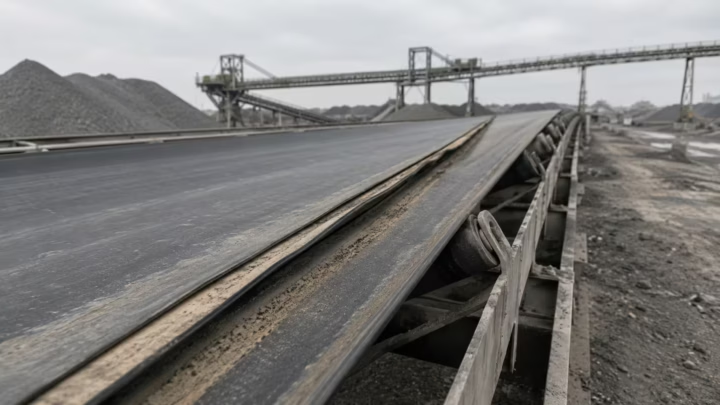
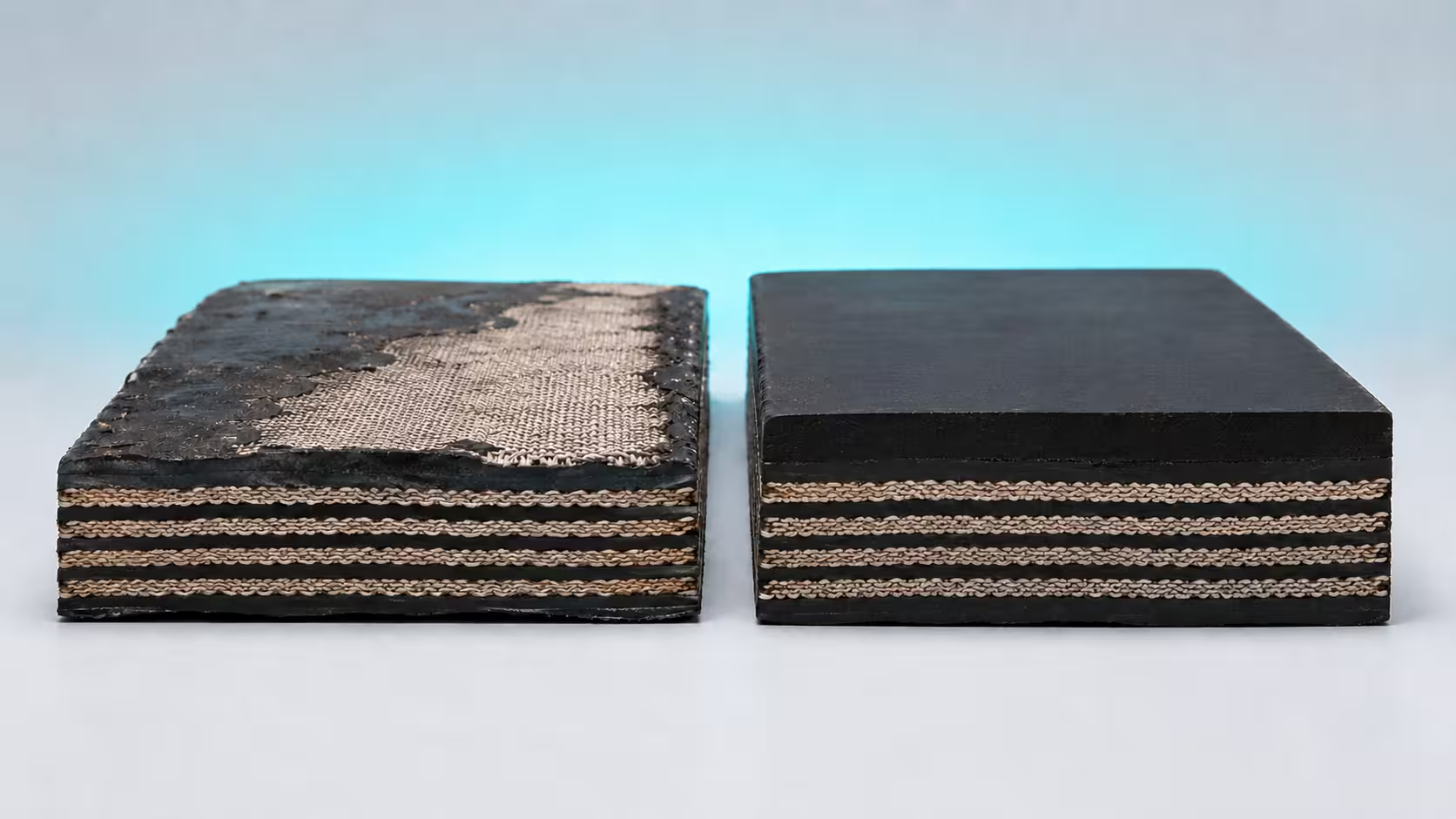
Set a worn conveyor belt down next to a new one and the difference does not jump out at you. Take a gauge to it, though, and you find it: a few millimetres of rubber gone from the top, next to nothing from the underside. Those millimetres do not vanish at random. They have a place, a pattern and a reason, and anyone who can read the place and the pattern knows whether the right rubber compound is running on their plant.
Where the wear really comes from
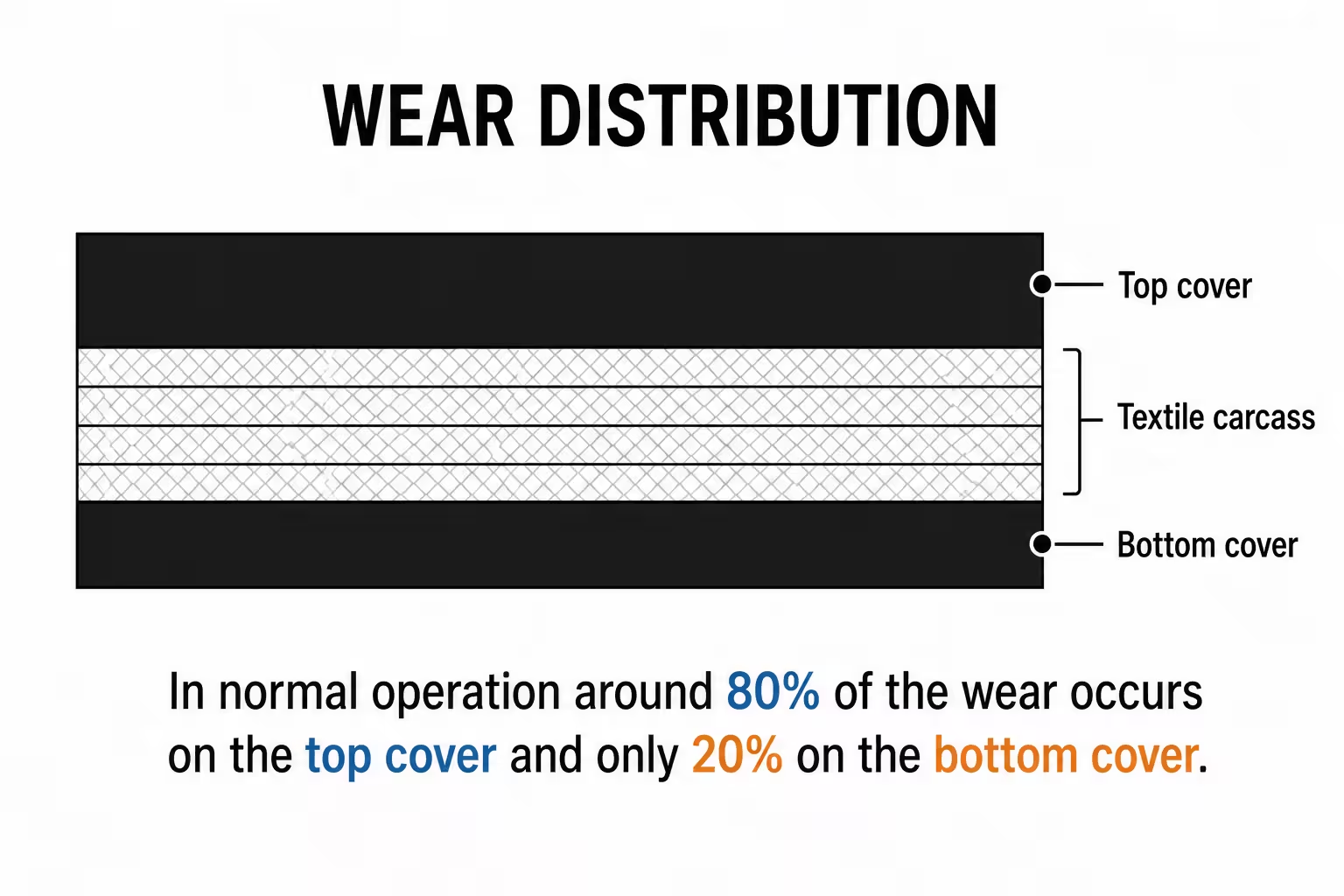
A conveyor belt is made of two very different parts. Inside sits the tension member, the fabric or the steel cords that take up the force and carry the load. Outside sits the rubber cover, on both sides in fact: on top the carrying side, where the conveyed material rides, underneath the pulley side, which runs over pulleys and idlers. Neither of the two covers carries load, they take the wear. The cover is the sacrificial layer: it wears down so the tension member beneath it stays intact, the way the sole of a work boot protects the foot. As long as there is rubber left on top, everything is fine.
Only this rubber does not wear at the same rate everywhere. A plant manager I once got to know was puzzled that his carrying side was going thin far faster than his pulley side. He already suspected a material fault and was ready to send the belt back. In fact it was perfectly normal. By far the largest share of the wear happens on top, on the side the material rides on. One belt manufacturer puts the split in its technical bulletin at roughly 80 percent carrying side to 20 percent pulley side. That is a manufacturer figure, not a standard. But it lines up with what you see in the field: the wear sits up top, and the pulley side stays sound far longer.
That is not bad news. Quite the opposite. It tells you where to look. If you want to keep an eye on the service life of your belt, you gauge the cover thickness on top and not underneath, and you gauge it where the material comes onto the belt. Because that is where the hot spot sits, at the loading point.
The loading point is the hot spot
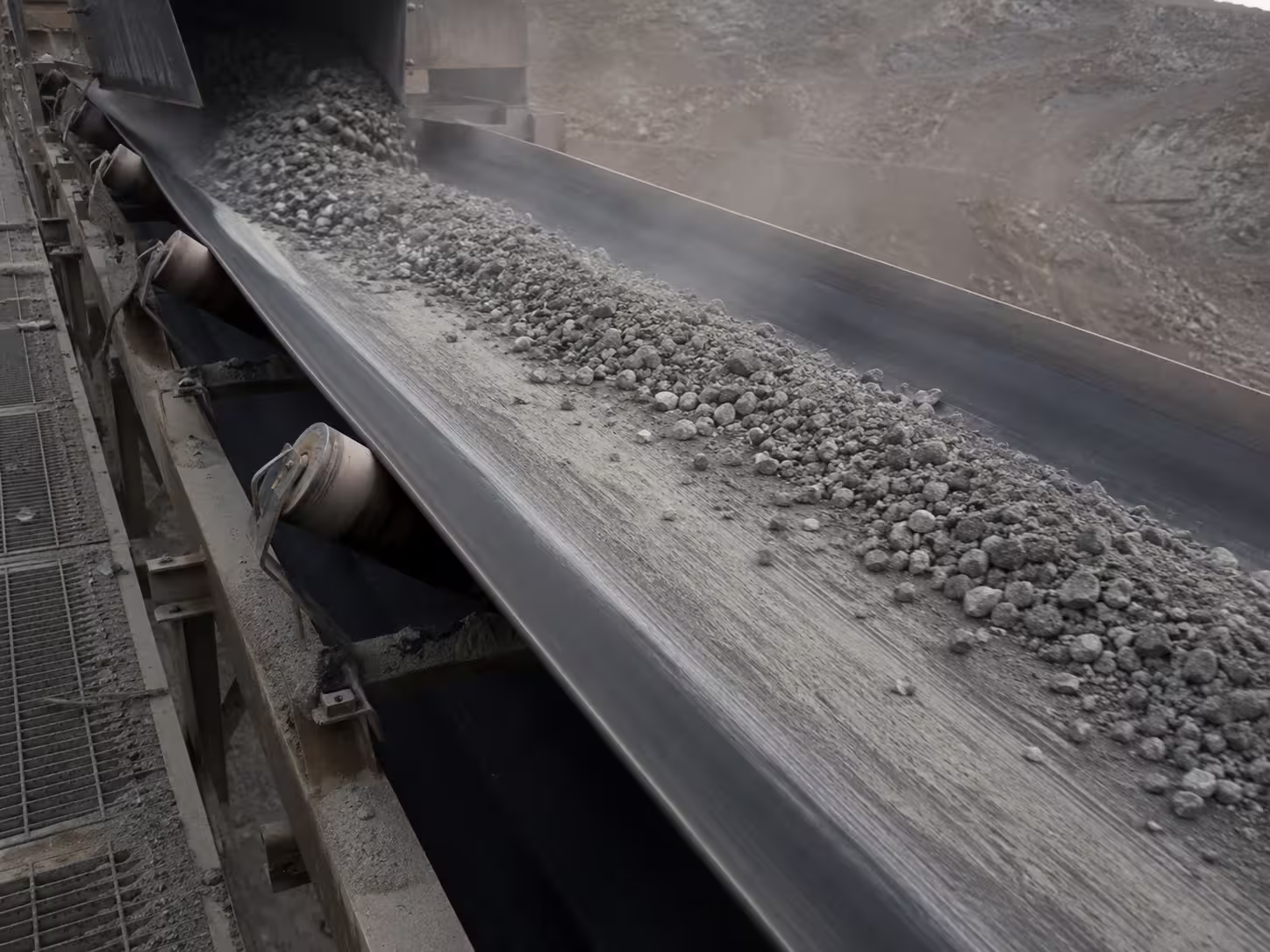
At the loading point something happens that is easy to overlook. For a moment the material sits almost still while the belt is already moving. It first has to be brought up to belt speed. In that split second the belt slips underneath the load until the two run at the same speed, like a tyre that spins for a moment as you pull away. That slipping is what sands the cover down the most. On every load, all day long.
So the loading point is where the cover goes thin first. Other spots add to it, wherever the belt meets friction: transfer points, discharge points and belt cleaning systems, and above all a badly set metal scraper that scrapes across the cover instead of wiping it clean. How a scraper is set up properly is a story of its own. Only one thing matters here: it can be a source of wear rather than protection.
One detail catches many people out: shorter belts see relatively more wear than long ones. The reason is simple. On a short installation the same patch of cover runs over the loading point and the scraper more often per hour. It clocks up more passes through the danger zone in the same time. Work that out across a year and you see why a short conveyor with the wrong rubber is finished sooner than its tensile strength would suggest.
The plant manager from earlier, by the way, did not go tinkering with the belt. We took the sting out of the loading point so the material arrived more gently and in the running direction, instead of at an angle and from a height. After that the cover lasted longer. That is the real lesson from the case: for longer service life, the loading point is a more effective place to start than the belt itself.
Reading the wear pattern: flat abrasion or gouges
If you have the belt in front of you cover-side up anyway, it pays to take a second look at the kind of wear. Because the cover wears in two different ways, and the two tell you different things.
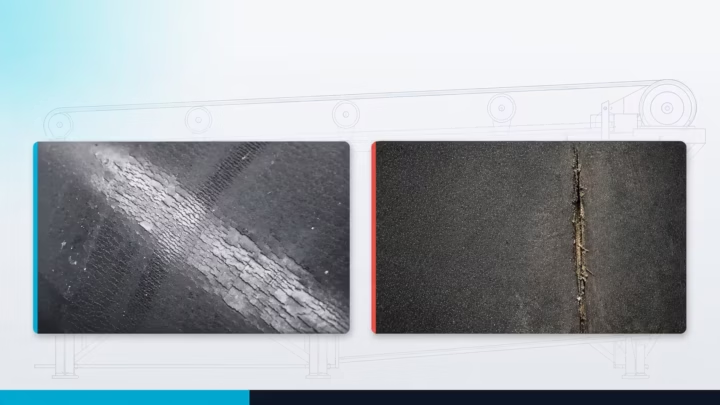
Fine, hard material such as sand, gravel or marl works like sandpaper. It takes the surface down evenly, across the whole face, without leaving individual marks. The belt gets a little thinner all over, dull and smooth. Heavy, sharp-edged material is another matter. Stones, scrap metal and broken glass cut and hammer. They leave individual notches and gouges, one here, one there, like knife marks on a chopping board. Each picture has its own cause.
| Wear pattern | Typical bulk material | What it looks like | What it tells you |
|---|---|---|---|
| Flat abrasion | Fine, hard sand, gravel, marl | Evenly thinner, a dull, smooth surface, no individual marks | A sanding action. This is a question of an abrasion-resistant compound |
| Notches and cuts | Heavy, sharp-edged lumps, scrap metal, glass | Individual cuts, dents and gouges, scattered across the face | Cutting and impact loading. This is a question of a cut-resistant compound |
The point behind all this: each picture calls for a different rubber compound. A compound tuned to resist sanding need not be any good against cuts, and the other way round. Buy rubber built only for flat abrasion and then run sharp-edged recycling material, and you will be left puzzling over gouges that the finest abrasion rating was never going to stop. The extreme case, where sharp material does not just notch the belt but punches straight through at the transfer point, is a chapter all of its own.

Why “abrasion-resistant” is not enough
That brings us to the biggest misunderstanding around covers. Almost every quotation carries the word “abrasion-resistant”. It sounds like a promise. It is only a direction, though, not a guarantee. Abrasion-resistant is not a pledge, it is a question waiting to be asked about the wear pattern: resistant to what?
There are different causes of wear, and they call for different rubber compounds. A belt sold with a blanket abrasion-resistant label can still wear out quickly if the compound does not match your particular bulk material. On paper, abrasion-resistant always looks good. In service, what counts is whether it is the right kind of abrasion-resistant for your material.
One belt manufacturer goes as far as claiming, in its bulletin, that more than half of the conveyor belts sold on the market fall below the minimum standard values for abrasion. Read that figure with care. It comes from the sales copy of a supplier promoting its own premium grades in the same document, and it has not been independently verified. As a market statistic it is worthless. As a warning it holds up: check the classification before you rely on the word “abrasion-resistant”. What the letters and grades of the belt marking actually mean is a subject in its own right.
Thickness is not everything
When the cover goes thin on top first, one thought suggests itself straight away: then make it thicker to begin with. That does help to some extent, only you pay for it somewhere else.
A thicker cover can make up for a poorer compound up to a point, since more rubber simply lasts longer. But it carries a cost you do not see on the invoice. More rubber means more weight, and that weight rides along on every revolution. It draws drive energy, day in, day out, and it makes the belt stiffer. So you pay for the extra millimetres twice: once when you buy them, once on the power bill.
For the ratio between the two covers there is a rule of thumb from manufacturer practice: the carrying side should be no more than three times as thick as the pulley side. The pulley side usually gets by with far less, roughly 30 to 50 percent thinner than the top, because it only runs over pulleys and idlers and barely sees any conveyed material. The rubber between the fabric plies usually stays under a millimetre. These are figures from individual manufacturers, not universally binding standard values, but they show the logic: plenty of sacrificial material up top, as little as necessary underneath.
And the limits of the material are in the data sheet, not in your gut. One advertised abrasion-resistant range, for instance, is rated by its manufacturer for minus 40 to plus 80 degrees Celsius. That holds for that product line, not for every belt, and it is a reminder that conveyed material and temperature together decide the compound, not thickness on its own.
The biggest cost lever sits in the cover
To see why getting the compound right is worth the effort, look at the money. On multi-ply and steel-cord belts the cover rubber usually accounts for at least 70 percent of the total mass and around half of the raw-material cost. That is the single biggest cost block in the whole belt. The wrong compound here therefore hits the total cost hard.
Just how badly that can turn out is shown by a documented example from a quarry. There, a 55 metre primary conveyor was fitted with a belt of type 1000/5, well oversized for the layout. You might think more strength never does any harm. Even so, the belt lasted on average only around 600 operating hours. Six hundred hours, in two-shift operation, is not even two months. Now add up every change, every stoppage, every hour of fitting work across the year. The problem was not the tensile strength. It was that the expensive cover did not suit the hard rock and the short conveyor. A belt that looked superior on the data sheet turned out to be the most expensive one in service.
Raising service life: the four levers
So what does all this mean for your plant? The good news is that you can start in several places.
The first lever is the loading point. Less drop height, material fed centrally and in the running direction, the acceleration jolt kept small. This one bites the hardest, because that is where most of the wear happens. The second lever is the compound: pick it to match the material, not the word on the quotation. Flat abrasion or gouges: that decides the rubber compound. The third lever is cleaning. A scraper that wipes the belt clean instead of scratching it protects the cover rather than helping to wear it down. And the fourth lever is tracking: set pulleys and idlers square so the belt does not run off at an angle and rub itself away on one side.
That leaves the question of when wear turns into damage. Plain flat abrasion is not a repair job. It is a matter of service life: the cover works itself down as designed until, one day, it is used up. It only gets critical when the tension member starts to show through. Once the fabric or the steel cords become visible, the protective layer is gone, and no patch will help then, the belt has to be replaced. No serious source will give you a fixed residual thickness in millimetres at which it is over; that depends on the belt and the operation. The visible tension member, on the other hand, is a clear signal, and it comes as a surprise to nobody who gauges the top cover on a regular basis.
- Most of the wear happens on top, on the carrying side, roughly 80 to 20 against the pulley side (manufacturer figure). Gauge the top, not the underside.
- The hot spot is the loading point, where the material is accelerated up to belt speed. If you want to gain service life, ease the loading point first.
- The wear pattern gives away the cause: flat abrasion from fine, hard sand, or gouges from sharp-edged lumps. Two mechanisms, two rubber compounds.
- “Abrasion-resistant” is no guarantee. The compound has to suit your particular bulk material, not the word on the delivery note.
- Thicker is not automatically better. More rubber offsets abrasion but costs weight and energy. Rule of thumb: carrying side to pulley side no more than 3 to 1 (manufacturer figure).
- The cover accounts for around 70 percent of the mass and half of the raw-material cost. A wrong buy is expensive here. Once the tension member shows through, a replacement is due.
Frequently asked questions
Why does the carrying side of a conveyor belt wear faster than the pulley side?
Because the material rides on top while only pulleys and idlers run underneath. One belt manufacturer puts the split at roughly 80 percent carrying side to 20 percent pulley side, which matches what you see in practice. On every revolution the carrying side meets the conveyed material, the acceleration jolt at the loading point and the scraper. That is why the pulley side is built thinner from the outset.
What does “abrasion-resistant” really mean on a conveyor belt?
It means the cover is designed to resist one particular kind of abrasion, not every kind. Different causes of wear call for different rubber compounds. A belt sold with a blanket abrasion-resistant label can still wear out quickly if the compound does not match your material. What counts is the exact classification, not the word in the quotation.
How thick should a conveyor belt cover be, and does a thicker one always help?
A thicker cover can make up for a poorer compound up to a point, but it raises weight, energy use and stiffness. As a rule of thumb, manufacturers give a ratio of no more than 3 to 1 between the carrying side and the pulley side. Almost always, the right rubber compound for your bulk material is a better move than blanket extra thickness. Thickness on its own does not replace the matching compound.
Can scrapers damage the conveyor belt cover?
Yes. A badly set scraper is one of the sources of cover wear, metal scrapers in particular, which scrape across the belt instead of wiping it clean. A well set scraper, by contrast, wipes the belt clean instead of scratching it, and keeps buildup away from the return idlers, the tail pulley and the return run. The setting decides whether the scraper helps or harms.
How do you tell when a conveyor belt cover is worn out?
Most reliably by the tension member showing through. Once the fabric or the steel cords become visible, the sacrificial layer is gone and the belt needs replacing. There is no universally valid residual thickness in millimetres at which it is over; that depends on the belt and the operation. This is why it pays to gauge the cover thickness on top and in the loading zone on a regular basis, rather than waiting for the breakthrough.
The Conveyor Belt Calculator delivers cross-section, drive power and a belt recommendation as a starting point, free in the browser and without signing up.