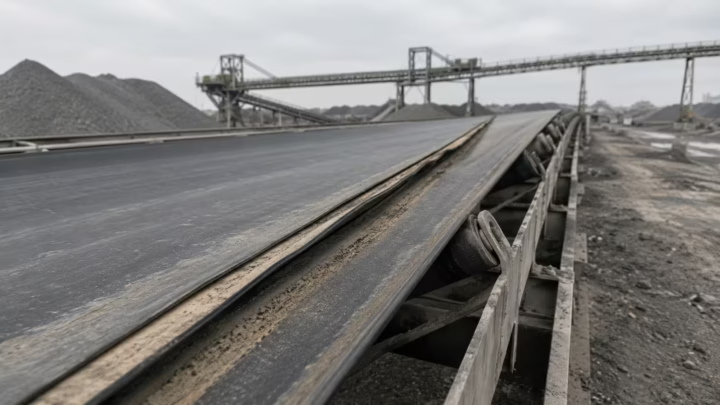
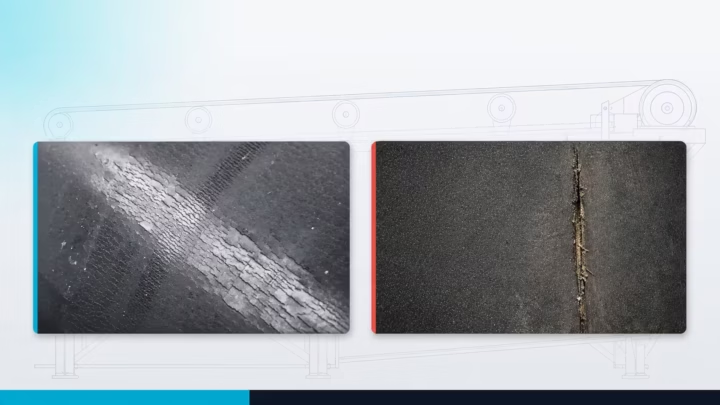
At the loading point you hear the problem before you see it. When a coarse lump drops out of the chute onto the belt, there is no soft landing, just a dull thud you feel through your feet if you are standing next to it. Run your hand over the belt afterwards and you find them right there: dents, impact marks and sometimes a hole you can see the fabric through.
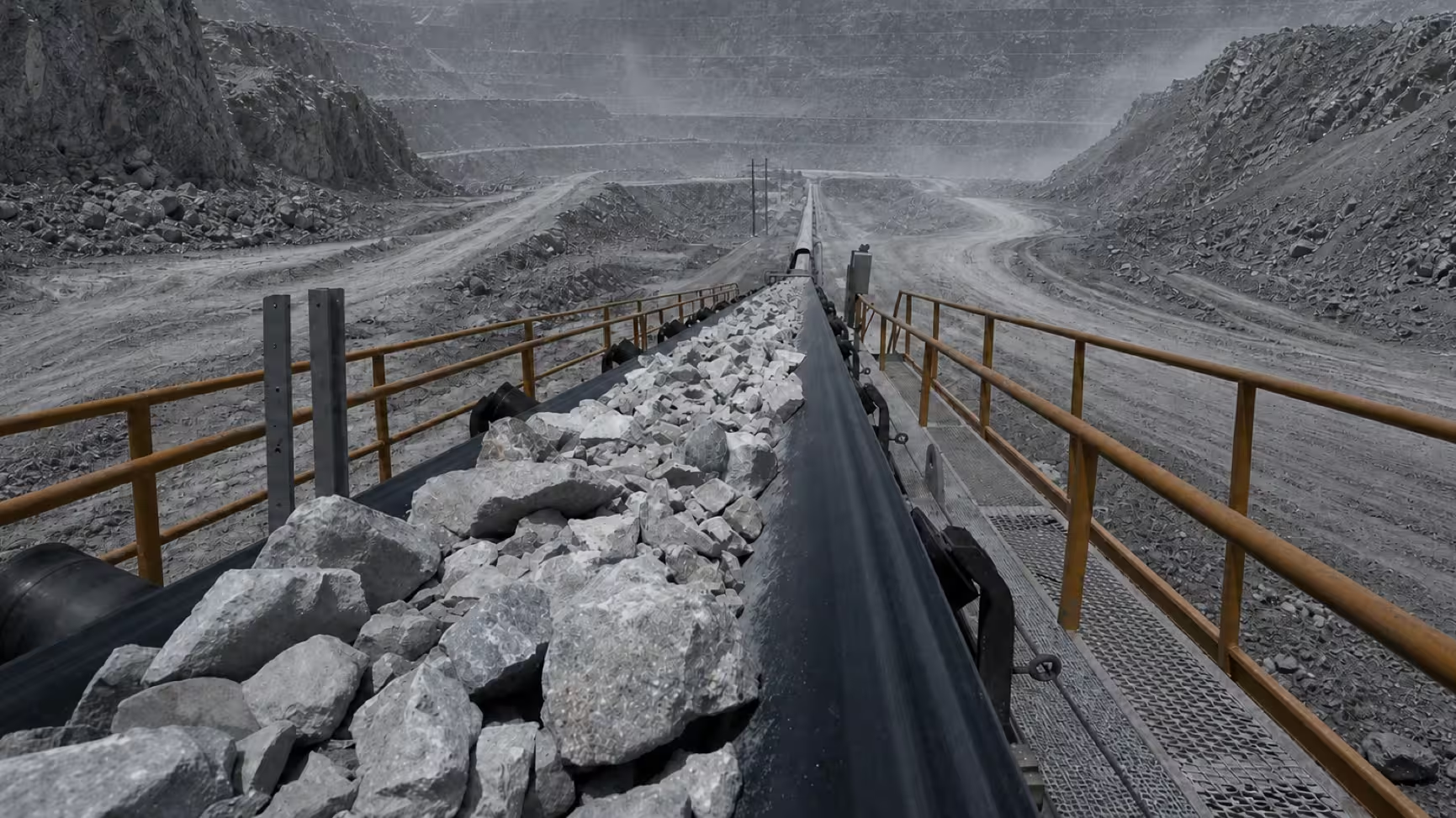
Why the transfer is the most dangerous metre on the whole belt
A conveyor belt runs over hundreds of metres, sometimes thousands, and most of the time nothing happens to it. It carries, it turns, it comes back. When it fails, it almost always fails at one single place: where the material is loaded onto it. The transfer is the most dangerous metre in the whole plant, and there is a physical reason for that.
At the loading point two loads meet, and either one on its own is enough to punish a belt. Heavy or sharp-edged material falling from a height hits the belt with real energy and leaves impact marks, dents or, in the worst case, a hole that goes right through to the carcass. At the same moment of impact the material is not yet moving with the belt and still has to be accelerated up to belt speed. So the blow from above and the abrasion from the acceleration work on the same patch at the same time.
It is like a carpenter hammering the same spot on a board all day. One blow leaves barely a mark. But the transfer strikes again with every load, hour after hour, always in the same place. That is why you see the wear there first, and why that is where the damage sits that takes a belt out of service before its time.
Dent, impact mark, puncture: when it is still harmless and when it is not
Not every impact is an emergency. It helps to keep three damage patterns apart, because they decide between repair and replacement. The line runs at the carcass, the tension member of fabric or steel that carries the load inside the belt.
| Damage pattern | What happens | Carcass | What it means |
|---|---|---|---|
| Dent | The cover is pushed in, springs back or stays slightly deformed | untouched | Annoying, but no reason to rush. Load-carrying capacity unchanged |
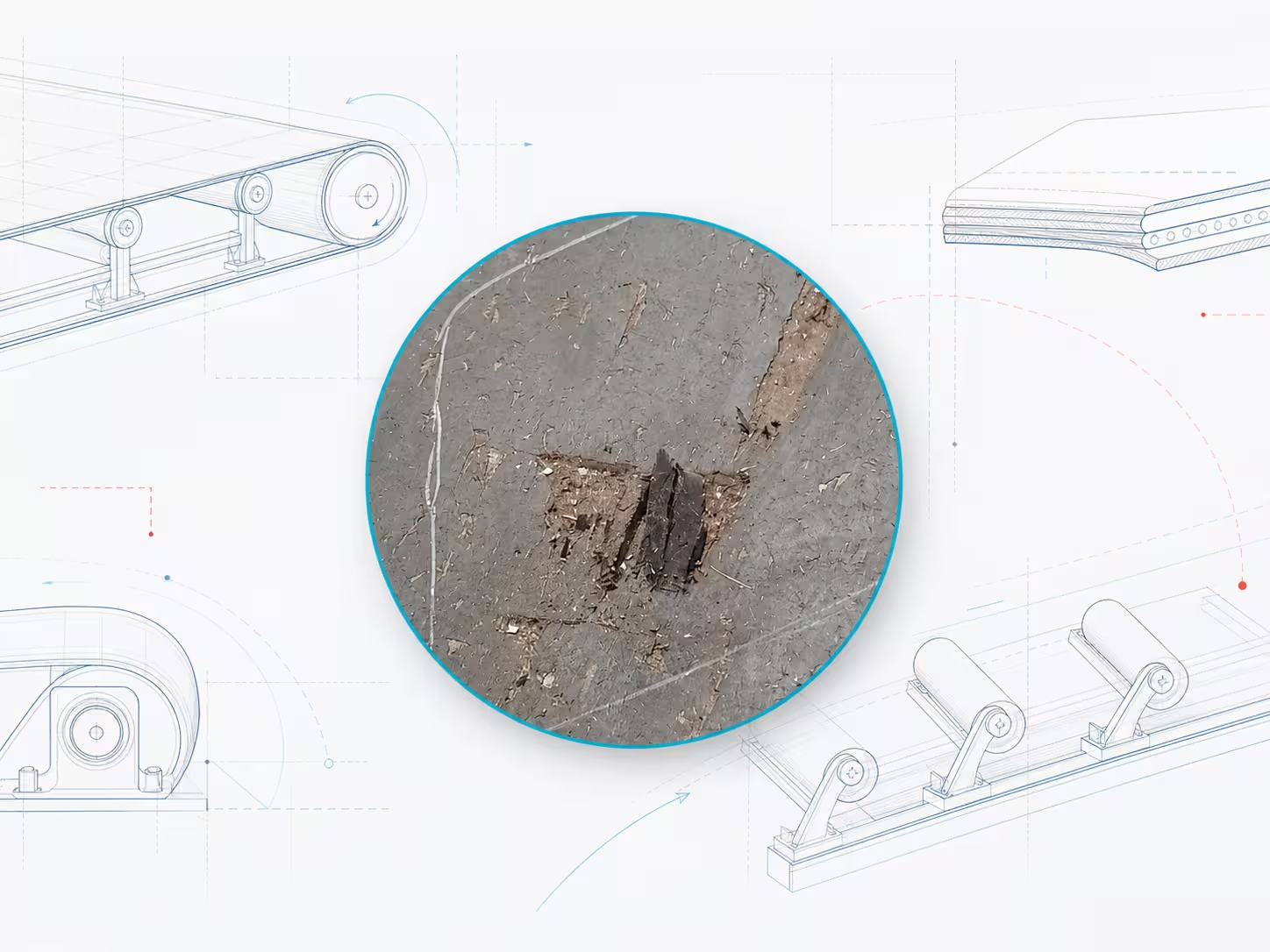
| Impact mark | Material tears or cuts a piece out of the cover, the rubber layer thins locally | still protected | Usually repairable, like a puncture in a tyre that does not reach the fabric |
| Puncture | The hole goes through the cover into the tension member | punctured through | Load-carrying capacity lost locally. Cut-out with a new splice, or replacement |
What that means for the decision: as long as only the cover is affected, the repair is pure routine. Once the carcass is punctured, it is not. Depending on the extent, the spot has to be cut out and re-spliced, or the belt reaches the end of the road at that point. A puncture hole, by the way, is a different thing from a long rip that runs through the belt in the running direction. That one comes from a trapped foreign object and travels horizontally with the belt, not vertically from above. It is a mechanism of its own, with its own prevention.
Taking the sting out of the loading point: an impact bed instead of single impact idlers
At a quarry a belt kept taking impact marks and dents right at the loading point, exactly where the coarse lumps came down from a height. Under the impact zone sat single impact idlers. They did cushion the blow, but only along their own narrow track, and whatever landed between them hit the belt where it sagged free. We fitted a continuous impact bed that catches the impact and spreads the energy over the whole area. After that the punctures were gone.
The difference is in the support. An impact idler holds the belt only along a narrow line. Between two idlers the belt sags free, and if a lump drops right into that gap, the blow goes through almost unchecked. A continuous bed supports the belt across the full width and length of the impact zone. It is the difference between jumping onto a plank and jumping onto a thick mat.
Cushioning elements like these are built from a combination of shock-absorbing rubber and a slide surface of ultra-high-molecular-weight polyethylene. The rubber soaks up the impact and takes the point load out of the belt, while the smooth plastic surface on top lets the belt glide over it with little friction. So at the transfer point the belt runs on a continuous, yielding support instead of on separate idlers.
According to manufacturer data, impact beds like these do four things at once. They dampen the blow and cushion the impact force. They protect the belt from cuts and punctures. They hold the material more steadily on the belt, spread it more evenly and so cut down the spillage at the edges. And in the process they lower dust, noise and maintenance effort. For you the second point matters most: fewer punctures, fewer holes, a belt that lasts longer.

Design levers: drop height, chute and the coarse lumps
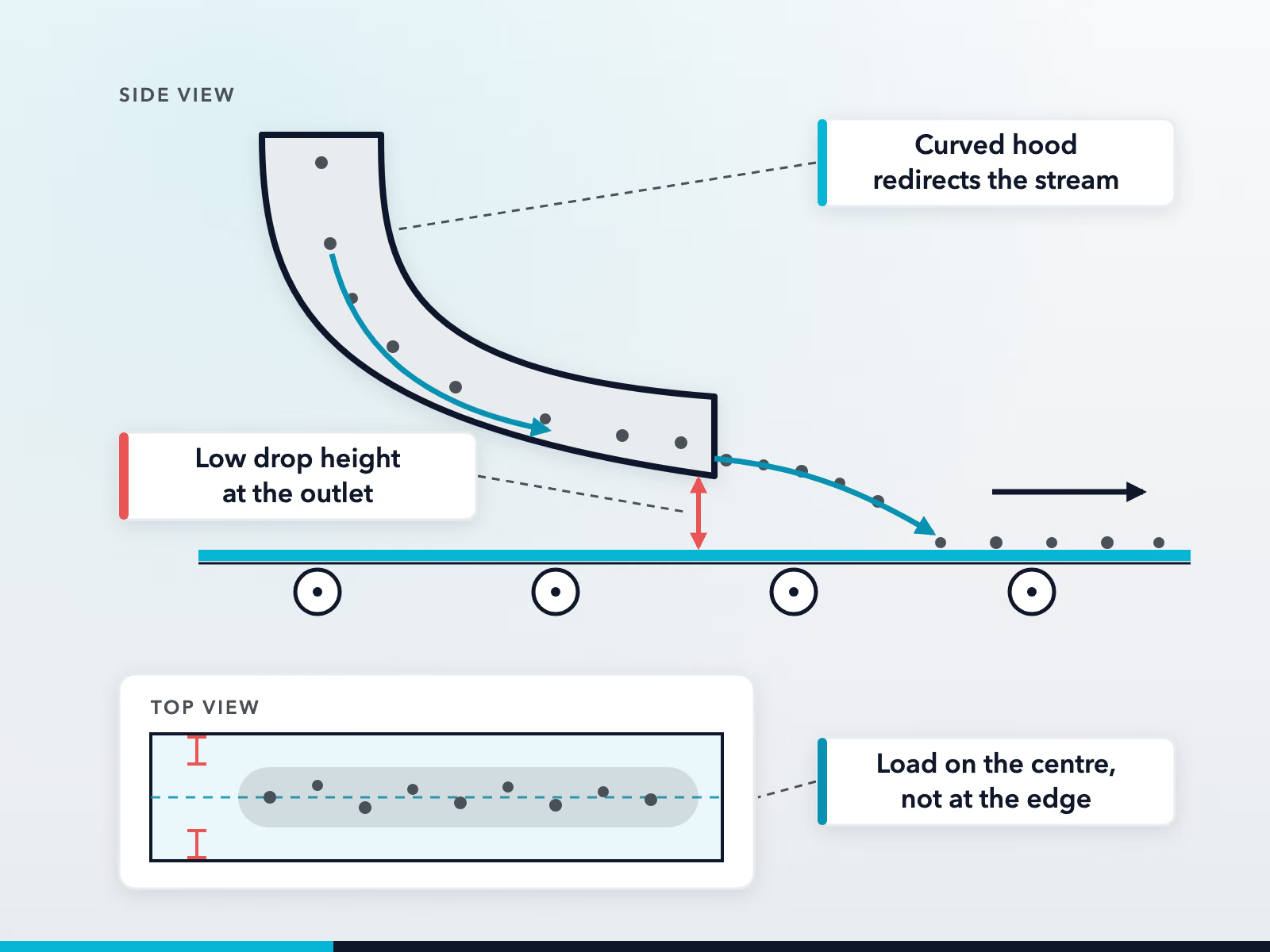
Before you cushion the impact, it pays to look at how much force there is in the first place. The cheapest cushioning is the kind you never need. The biggest lever is the drop height. Every extra metre a lump falls, it hits that much harder, and in the end someone has to absorb that energy, usually the belt.
For a rough sense of when falling material starts to get tricky, one corporate safety manual gives a guideline. It applies internally there and is expressly not a general standard value: particle sizes under 16 millimetres count as low risk when they fall only occasionally from a drop height of no more than 5 metres. Above a drop height of 5 metres, the same guideline calls for a separate risk assessment. Do not take these numbers as a limit for your belt, but as what they are: a pointer that drop height and lump size together decide the risk. If fist-sized hard rock is coming down at your plant from several metres up, you are in a completely different league from trickling sand.
The second lever is the loading geometry. The chute, which guides the material from above onto the belt, should feed it centrally and in the running direction, not at an angle from the side. When the stream lands centrally and in line with the travel, the load spreads out, the belt runs more smoothly and the impact does not concentrate on one edge. Off-centre loading does double harm: it increases the local impact and pulls the belt off track as it goes. And where especially large or sharp-edged lumps are in the material stream, the best place to hold them back is before the loading point, for instance with a coarse grizzly.
What you line the chute walls themselves with against wear, whether rubber, ceramic or plastic, is a topic of its own. The subject here is protecting the belt, not lining the transfer wall.
Choosing the right belt: puncture resistance you cannot read off a spec
When loading and cushioning are right and holes still appear, the belt itself comes into play. And here there is an uncomfortable truth: no single figure tells you how puncture- and tear-resistant a belt is. For abrasion there are standardised grades you can steer by. For tear strength as a property in its own right, there is no internationally recognised test method with fixed performance requirements. There is a test method that measures the resistance to an incipient crack starting to tear, but no standard that says what value a good belt has to reach.
That is one reason manufacturers rarely advertise this property, even though resistance to tearing in a quarry or in recycling is often more important than any other. On paper a belt with no tear-strength class looks like any other. In service at the transfer point it is a different story.
Technically, puncture protection can certainly be improved. The principle: instead of a conventional fabric ply, the weft threads in the weave are made stretchable. When an object gets trapped, these threads bunch together and can stop the belt rather than let it tear. According to manufacturer data, a special weave like this is at least three times as tear-resistant as an ordinary fabric-ply construction. That is a manufacturer figure, not a tested standard, but the working principle is plausible: a weave that gives way to the foreign object and holds it fast is more likely to survive than one that tears open at once.
That leaves the cost question. The cheap reflex at a puncture-prone spot is the throwaway belt: fit one, let it wear out, order the next. Add up repair, replacement and downtime, and the maths rarely works out. A throwaway belt at the transfer point is like a cheap tyre on a gravel track. It costs little at first, and then it costs you constantly: the belt, and on top of that the downtime while you swap it.
And still, even the best belt does little as long as the loading point stays as it is. A puncture-resistant belt over a loading point that has not been sorted out wears just the same, only at a higher price. Put the transfer point right first, then talk about belt quality.
- Impact damage almost always starts at the loading point, where heavy or sharp-edged material lands from a height and the blow overlaps with the abrasion from the acceleration.
- Tell three damage patterns apart: dent (harmless), impact mark (cover damaged) and puncture (carcass punctured through, load-carrying capacity lost locally). Only the puncture is a case for a cut-out or replacement.
- A continuous impact bed spreads the blow over the area and protects the belt better than single impact idlers, which pass the blow on at a point.
- The biggest lever sits ahead of the belt: cut the drop height, aim the chute centrally and in the running direction, screen out large lumps beforehand.
- Puncture resistance cannot be read off any standardised figure. Special weaves with stretchable weft threads raise it, but they are a manufacturer matter, not a class you can look up.
- Cheap throwaway belts at the transfer point do not pay off once repair, replacement and downtime are counted in. Take the sting out of the loading point first, then choose the belt.
Frequently asked questions
Why does impact damage almost always happen at the transfer point?
Because two loads come together there. Material falls from a height onto the belt with high energy and leaves impact marks or a puncture hole. At the same moment of impact the material is only just being accelerated up to belt speed, so the blow overlaps with abrasion. This combination does not exist anywhere else on the belt in that severity, which is why the transfer point is the most critical spot.
What are impact beds or cushioning elements and how do they protect the belt?
An impact bed is a continuous, yielding support under the impact zone, usually made of shock-absorbing rubber with a smooth slide surface of ultra-high-molecular-weight polyethylene. Instead of leading the impact into the belt at a point, the way a single impact idler does, it spreads the energy over the area. Impact beds like these dampen the blow, prevent cuts and punctures, hold the material more steadily on the belt and, in the process, reduce dust and noise.
At what drop height does material loading become critical?
There is no universal limit, because drop height and lump size work together. As an internal guide, one corporate safety manual states: particles under 16 millimetres count as low risk when they fall only occasionally from no more than 5 metres, and above a drop height of 5 metres a separate risk assessment is due. That is a company-internal reference value, not a standard. For your belt the rule is: the larger the lumps and the higher the fall, the more it matters to cut the drop height and add cushioning.
When is impact damage still repairable and when is it not?
As long as only the cover is affected, that is, dents and impact marks that do not breach the carcass, the spot can usually be repaired. Once the carcass is punctured, the belt has lost its load-carrying capacity there. Patching is no longer enough, and depending on the extent the spot has to be cut out and re-spliced, or the belt replaced.
Which belt quality is puncture-resistant?
You cannot read it off a class, because unlike abrasion, tear strength has no standardised figure with fixed requirements. You can improve the protection through the fabric construction: special weaves with stretchable weft threads bunch up around a jammed object and can stop the belt rather than let it tear. Figures like these are a manufacturer matter. So do not rely on the belt alone; take the sting out of the loading point first.
The Conveyor Belt Calculator shows the cross-section, mass flow and drive power of your installation, free in the browser and without signing up.