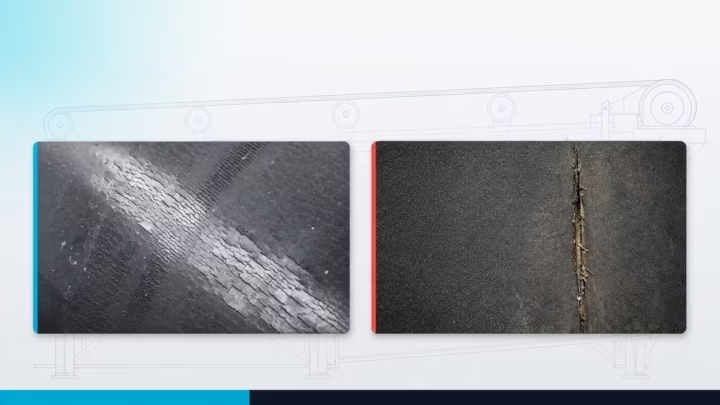
Most conveyor belt damage gives you warning. A longitudinal rip does not. I have walked into plants where the belt was still running in the morning and by midday was cut open over several metres, clean along the running direction, as if drawn with a knife. Not a tear across the belt. A cut that travels with the belt and grows longer with every revolution.
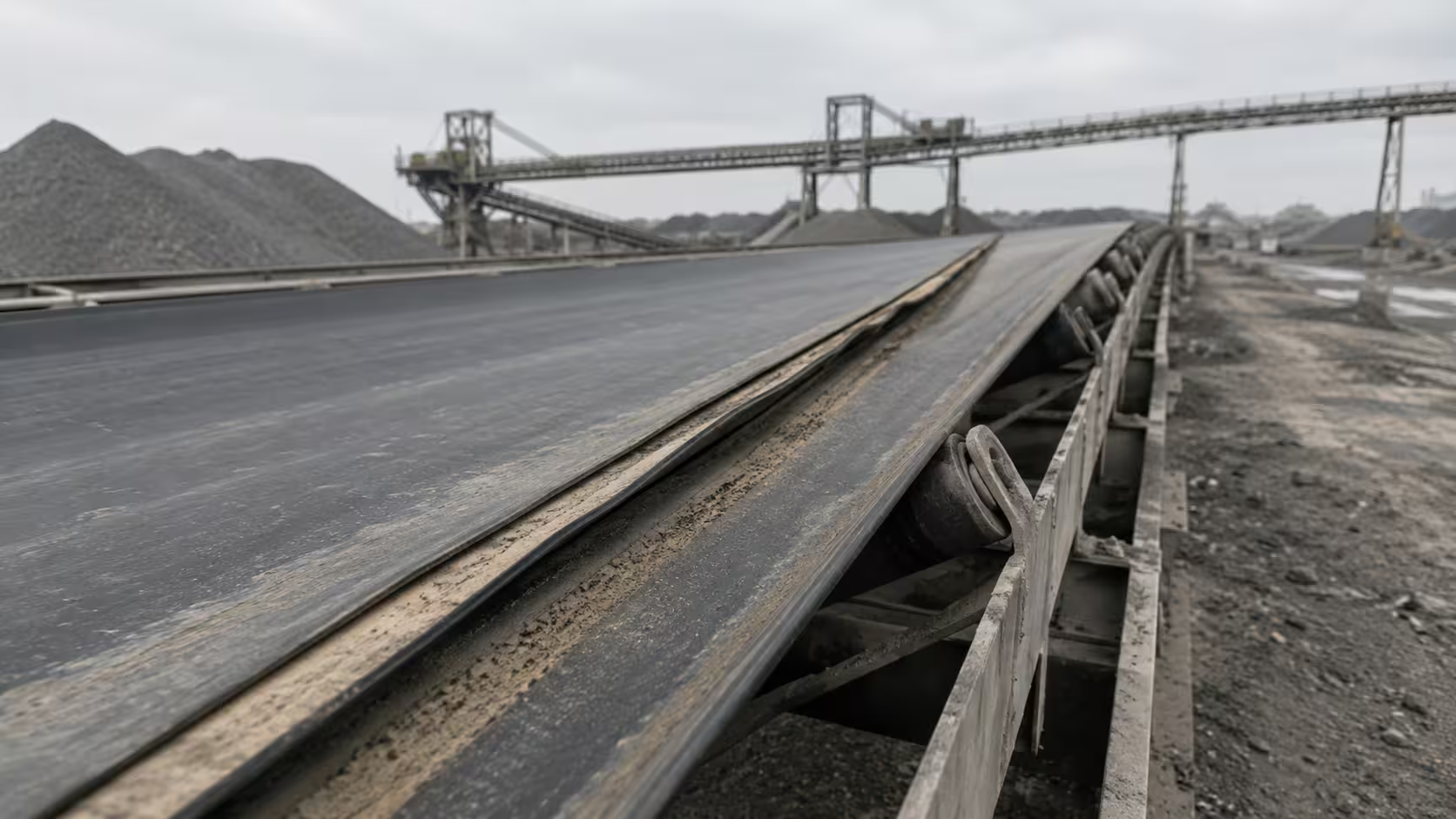
How a foreign object turns into metres of damage
At a recycling operation I once saw a nearly new belt lost in a single day. There was a piece of metal in the material stream, a sort of broken-off bar, and at some point it wedged fast at the chute. From then on it was no longer a foreign object. It was a tool. The belt kept running, dragged itself along the fixed bar, and the bar cut it open lengthwise as it went. One metre, two metres, and in the end there were many.
In a moment like that a foreign object works like a fixed knife that the belt is dragged along. As long as nobody stops the belt, the knife keeps cutting, revolution after revolution.
The real damage happens where you cannot see it, in the carcass. Once a sharp-edged object works through the cover and into the tension member, the strength of the belt is broken along that line. And here is the unpleasant part. A stronger belt is no help. Even the heaviest, strongest belts are destroyed quickly once a foreign object lodges and works into the carcass. A belt forgives a great deal. Not this.
Why a longitudinal rip is the most expensive damage of all
There is plenty of expensive damage in conveyor technology. A longitudinal rip is the most expensive of all. Other kinds of damage stay local. A transverse tear sits in one place, an impact punches a hole, and both can often be repaired. A longitudinal rip eats the belt along its full length, in the very direction in which the belt is longest.
Take a moment to see what is at stake. A conveyor belt is not a part you simply pull off the shelf and drop back in. In my experience it is one of the most expensive single items on the whole plant. Destroy it over great lengths in one stroke and you are not looking at a spare part but at a new belt, plus the time to source it, fit it and splice it. Scale that up to a day of downtime, with the plant standing still and nothing moving through it.
That is why, with a longitudinal rip, every penny spent on prevention pays back twice. It saves the belt, and it saves the downtime. Set against those two items, the purchase price of a magnetic separator is small. You will find no hard money figure for a day like that here, and that is deliberate: any honest number depends entirely on your plant. You feel the order of magnitude all the same, once you have lived through a belt change yourself.
Where the foreign object comes from: the usual triggers
A longitudinal rip does not come out of nowhere. At the start there are almost always two things: something that has no business on the belt, and a spot where it can lodge. It takes the two together to do the damage. The most common combinations look like this:
| Trigger | Where it lodges | How to spot it |
|---|---|---|
| Sharp-edged foreign object: a piece of metal, a tool, a broken-off bar | At the chute, at the transfer point, at an idler set | Metal in the material stream that nobody separated out before the loading point |
| Jammed or oversized lumps | In the chute, right at the loading point | A blockage, material backing up that will not flow away |
| A broken or seized idler | Under the belt, at the idler set | The roller no longer turns, drags or runs hot |
| Material building up between belt and structure | At the frame, at guides and seals | Deposits the belt rubs against |
Two rows are worth a second look. A broken or seized idler is dangerous twice over: it can become a cutting edge in its own right, and when it stands still, that is often the first sign that something is jamming. How to hear a bearing failing before it gets that far is a subject of its own. And the transfer is the most restless spot on the whole plant anyway. This is where material lands, where it backs up, where anything that can wedge does wedge.
Catch it early and stop the belt at once
Once a longitudinal rip is running, only one question is left: how quickly someone stops the belt. That is exactly what rip monitoring is for. At a mining operation fitted with belt monitoring I saw a small puncture that never got the chance to grow into a long rip. A row of sensors under the belt noticed the damage, raised the alarm and stopped the drive before the puncture turned into metres of damage on the next pass. Without that monitoring, the puncture would have become damage over many metres in no time.
How such a system works is easiest to show through one example principle that a manufacturer describes. The values are manufacturer data, not an industry standard, but they make the principle tangible. A row of eight ultrasonic sensors sits under the conveyor belt. An intact belt reflects the emitted sound waves evenly. A rip or any damage breaks that pattern, and the sensor raises the alarm at once. The sensors scan the belt as it runs and can be tuned to one another so they do not interfere with each other.
Two supporting signals go with it, and they often flag the trouble a stage earlier. Inductive sensors mounted on both sides of the belt read a metal reinforcement in the belt to detect any mistracking; they still respond from up to 50 millimetres away. If the belt runs off track and the sensors lose sight of the reinforcement, they trip and report the fault. And a speed monitor counts the metal bolts in the belt and works out the belt speed from them; the signal evaluation handles pulse trains up to 40 kilohertz. If the belt speed drops below a threshold, that points to a material jam or a blockage. Mistracking and jamming are both often the stage before a pinch point. See them early and you see the longitudinal rip coming before it is even there.
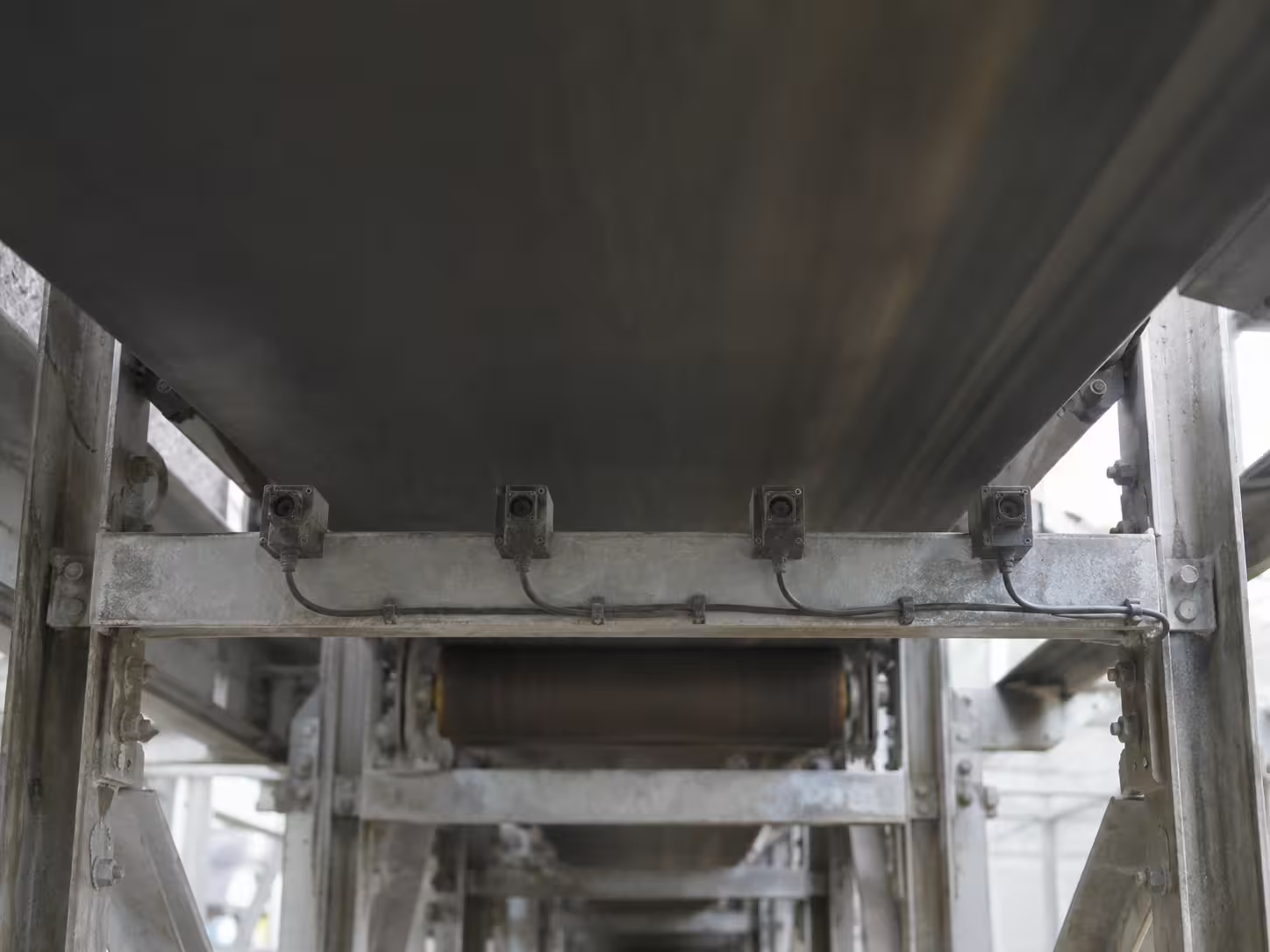
That is the real gain from monitoring like this. The visual inspection on the walk-round stays valuable, but it has a built-in gap. Time passes between two checks, and that is exactly when a puncture quietly keeps growing. A sensor that scans the belt without a break has no such gap. With a longitudinal rip, that time decides whether the damage ends up a hand’s width or many metres long.
Only clear blockages with the plant shut down
A word on safety, because with a longitudinal rip it becomes a practical matter straight away. Anyone who spots a foreign object or a blockage wants to clear it, ideally right now. A large share of accidents on belt conveyors happen while clearing buildup and blockages. So the rule holds without exception: you remove jammed material only with the plant shut down and locked out against being switched back on.
A quick sum shows why the rule is that strict. Take an average reaction time of half a second. Half a second, about as long as it takes you to pause and register something. In that time a belt running at one metre per second, roughly half walking speed, has already moved half a metre. Your hand is long past where you wanted it to stop. A running belt does not forgive that moment.
Prevention: keep foreign objects out
The good news with a longitudinal rip is that prevention is not complicated. It comes down to taking away the two things the damage needs: the foreign object and the pinch point. Remove either one and the rip never forms in the first place.
The most effective lever sits ahead of the loading point. Magnetic separators pull metal out of the material stream; grizzly grates and screens hold back the coarse lumps. Whatever is caught here never reaches the belt and cannot rip it open. Alongside that, the chute is worth a look: a geometry without tight pinch points gives a wedged piece less to hold onto. And idlers that turn freely and run true do not cut into the belt themselves.
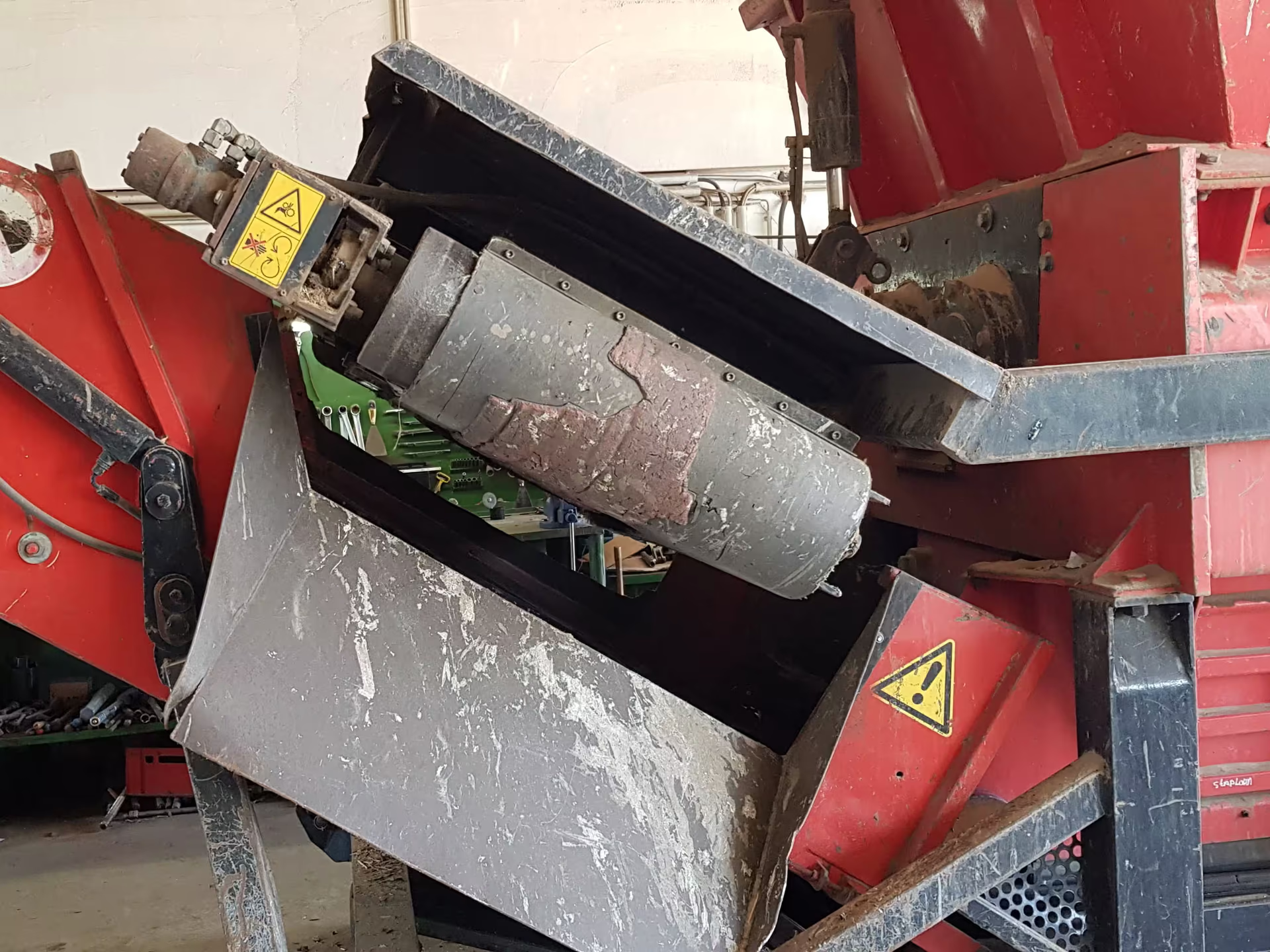
The last building block is monitoring with an instant stop, for the times something slips through anyway. Early detection lowers unplanned downtime and maintenance costs, according to the suppliers of such systems, because damage caught early is faster and cheaper to put right, and it protects idlers, pulleys and scrapers in the process. The suppliers give no percentages or money figures for that, and I will not invent any.
That leaves the question of what to do with a rip that is already there. A short rip, stopped early, can often be bridged with mechanical fasteners, as a stopgap until a proper splice is possible. The longer the rip ran undetected, the more likely it is that the local repair turns into cutting out great lengths or a complete replacement. A fixed figure in metres, beyond which only replacement is left, is not something the sources give, and I would not trust it either. The condition at the belt decides that. One thing always holds, though: the earlier you stop the puncture, the smaller the bill stays.
- A longitudinal rip forms when a foreign object jams tight and works into the carcass. The running belt cuts along it, and the damage grows with every revolution.
- It is the single most expensive kind of belt damage, because it destroys great lengths in one go. A stronger belt is no protection against it.
- Typical triggers: sharp-edged metal in the material stream, jammed lumps at the chute, seized idlers, blockages at the transfer point.
- Catching it early is what counts: sensors scan the belt and stop it at the first puncture, before it becomes the long rip.
- Clear jammed material and blockages only with the plant shut down and locked out. A running belt does not forgive half a second.
- Prevention means separating foreign objects out, taking the pinch points out of the equation and keeping an eye on the state of the rollers. That is cheaper than any replacement belt.
Frequently asked questions
What causes a longitudinal rip in a conveyor belt?
Almost always a foreign object that jams tight and works into the carcass: a sharp-edged piece of metal, a tool, a broken-off bar. Once it wedges at a pinch point such as the chute or a seized idler, the running belt cuts along it, and with every revolution the puncture becomes a longer rip.
Why is a longitudinal rip so much more expensive than other damage?
Because it destroys great lengths of belt in one go, instead of just a local spot. A transverse tear usually stays contained and can often be repaired with a splice. A longitudinal rip, by contrast, runs over many metres. On top of that comes the downtime, until a replacement is there and pulled in.
How does rip monitoring detect the damage in time?
Through sensors that scan the belt as it runs. In one example principle from a manufacturer, a row of ultrasonic sensors sits under the belt. An intact belt reflects the sound waves evenly; damage breaks the pattern and raises the alarm at once. Alongside, other sensors detect mistracking and a belt running too slowly, both forerunners of pinch points. The instant stop is what matters, because it alone keeps the puncture from becoming the long rip.
Can a long longitudinal rip be repaired?
That depends on the length, and only an honest inspection helps there. A short rip, stopped early, can often be bridged with mechanical fasteners. The longer it ran undetected, the more likely it is that great lengths have to be cut out or the whole belt replaced. There is no fixed figure in metres beyond which only replacement is left. The condition on site decides that.
How do I stop foreign objects from ripping the belt open?
Keep the foreign objects out before they ever reach the belt. Magnetic separators, grizzly grates and screens ahead of the loading point catch metal and coarse lumps. A chute free of pinch points gives a wedged piece less to hold onto, and idlers in good condition do not seize. Add monitoring with an instant stop for anything that gets through anyway.
The Conveyor Belt Calculator works through motion resistances and drive power and suggests a belt type, free in the browser and without signing up.