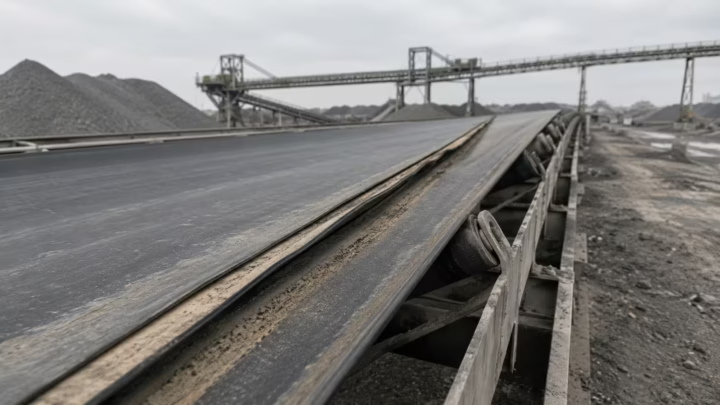
At a gravel plant, a wide belt ran dead straight when it was empty, as if drawn with a ruler. The moment gravel sat on it, it wandered off to one side, and stones barely two centimetres across were enough to do it. Everyone went looking at the tracking. We found the fault somewhere else entirely.
Why mistracking gets expensive before anyone takes it seriously
A belt running a few centimetres off centre looks harmless at first. The plant keeps conveying, after all. That is exactly what makes mistracking so treacherous. Early on, it hurts nobody.
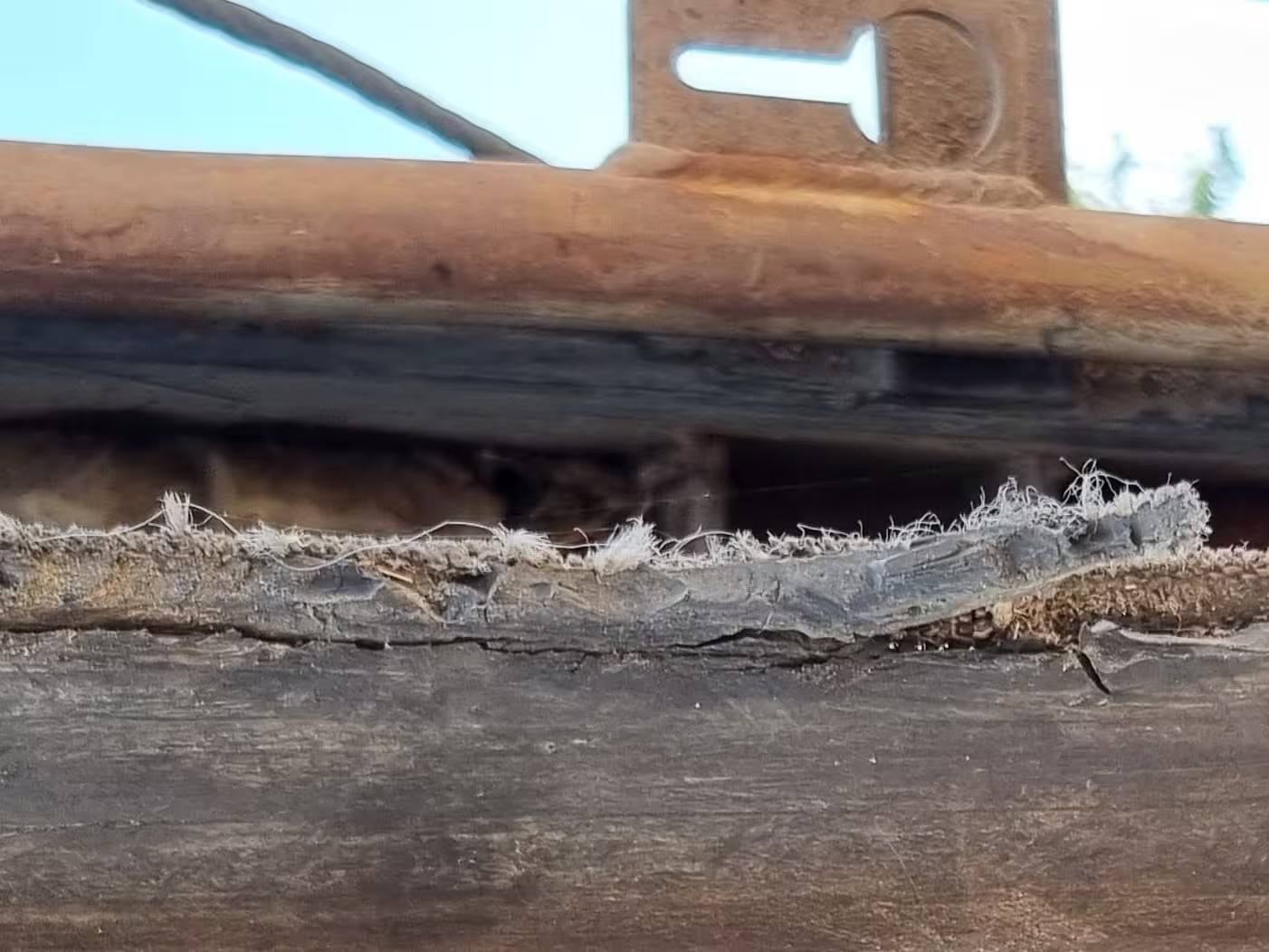
What is really going on shows up at the edge. A fast-moving belt edge that rubs against the steelwork all day frays, loses pieces, and can cut through steel brackets surprisingly quickly. What is left is an edge ground knife-sharp, and the next person who reaches into the belt can get badly hurt on it. An adjustment issue has turned into a safety hazard.
And it does not stop at the edge. Left unnoticed, mistracking destroys long stretches of belt and takes the structural steel with it. A bracket or support worn through can give way eventually, and then you are no longer talking about adjustment but about follow-on damage that shuts the whole plant down. On top of that come the quiet costs: spilled material, more maintenance hours, less throughput.
A conveyor belt is not a throwaway part. It is often the single most expensive component in the whole plant, and mistracking eats it away from the edge in.
The basic rule of belt tracking
You do not need a book of formulas to find the cause. You need one rule from the field: the belt runs towards whatever it touches first and wherever the resistance is greater. Set an idler at an angle and it steers the belt the same way, turn after turn. Let a friction force act on one side only, from a patch of buildup or dragging skirting at the chute, and the run loses its balance.
That rule turns guesswork into a method. The question is no longer why the belt runs off. It becomes: what gives it a reason to run off at this spot and in this direction? A belt does not mistrack for the fun of it. Something gave it a reason.
It is like a car that keeps pulling to the right as you drive. You can hold the wheel against it all day, but nobody would call that a repair. You get the wheel alignment checked.
The cause tree: four families of suspects
The causes of mistracking and misalignment sort into four families. Part of the list comes from technical articles on correcting mistracking, part from the fault catalogue of a maker of self-aligning idlers who sees cases like these every day. The third column is field experience from many jobs, not a standard value, but a usable signpost.
| Family of causes | Typical triggers | How you spot it |
|---|---|---|
| Loading and feed | Material lands off-centre or at an angle, uneven weight distribution, sideways push out of the chute | The belt runs straight empty and only mistracks once loaded |
| Alignment | Pulleys or idler sets sit out of square with the belt axis, a warped steel structure, a crowned head pulley, fitting errors | The mistracking stays fixed at the same spot, even when running empty |
| Belt condition | The belt is not straight, worn, or badly spliced | The off-track spot travels round with the belt loop |
| Operation and environment | Wrong belt tension, buildup on rollers and pulleys, one-sided friction from a scraper, the skirting or a seized roller, vibration, sun on one side only | The mistracking comes and goes, often with the load, the weather or the time of day |
Two entries deserve a second look. A seized or broken idler brakes on one side, which is why it lands in the fourth family; how to hear a bearing failure before you see it is a topic of its own. And the sun sounds like an excuse, but it is right there in the idler maker’s fault catalogue: sun on one side is enough, it says, to push a belt off track. Anyone who has chased that on a summer afternoon has stopped laughing about it.
Detective work: watch first, adjust second
Before you adjust anything, stand and watch. Where the symptom shows narrows down the possible causes. Note where the belt first runs off track: before or after the loading point, on the loaded carrying run or the empty return run, always at the same place or wandering. If the off-track spot stays put while the belt runs through it, the cause sits in the plant, at a roller, a pulley or the structure. If it travels round with the belt loop, it sits in the belt itself, in a crooked splice, say.
The second test is the comparison between empty and loaded. The gravel plant from the start was the lesson here: empty, the wide belt ran perfectly; loaded, it wandered at once, and even the smallest stones pulled it off track. People spent weeks looking at rollers and pulleys. Yet a belt that runs straight empty and off track loaded practically gives itself away: the cause is in the loading, not in the belt. There the material sat off-centre, and the belt tension did not match it. Only once the material was fed on centre and in the running direction did the belt run straight under load too.
Just how much the path of the material matters, I learned on a short belt where the mistracking got the better of me for a long time. Idlers aligned, tension checked, and all of it helped only for a few days. Then I took a proper look at the material stream coming out of the chute. The material fell neither straight down nor in the running direction; it came in at an angle and shoved the belt a little to the side with every surge. A short belt reacts to such a sideways push far more sensitively than a long one. We rebuilt the chute so the stream lands on centre and in the belt’s direction. After that the mistracking was gone.
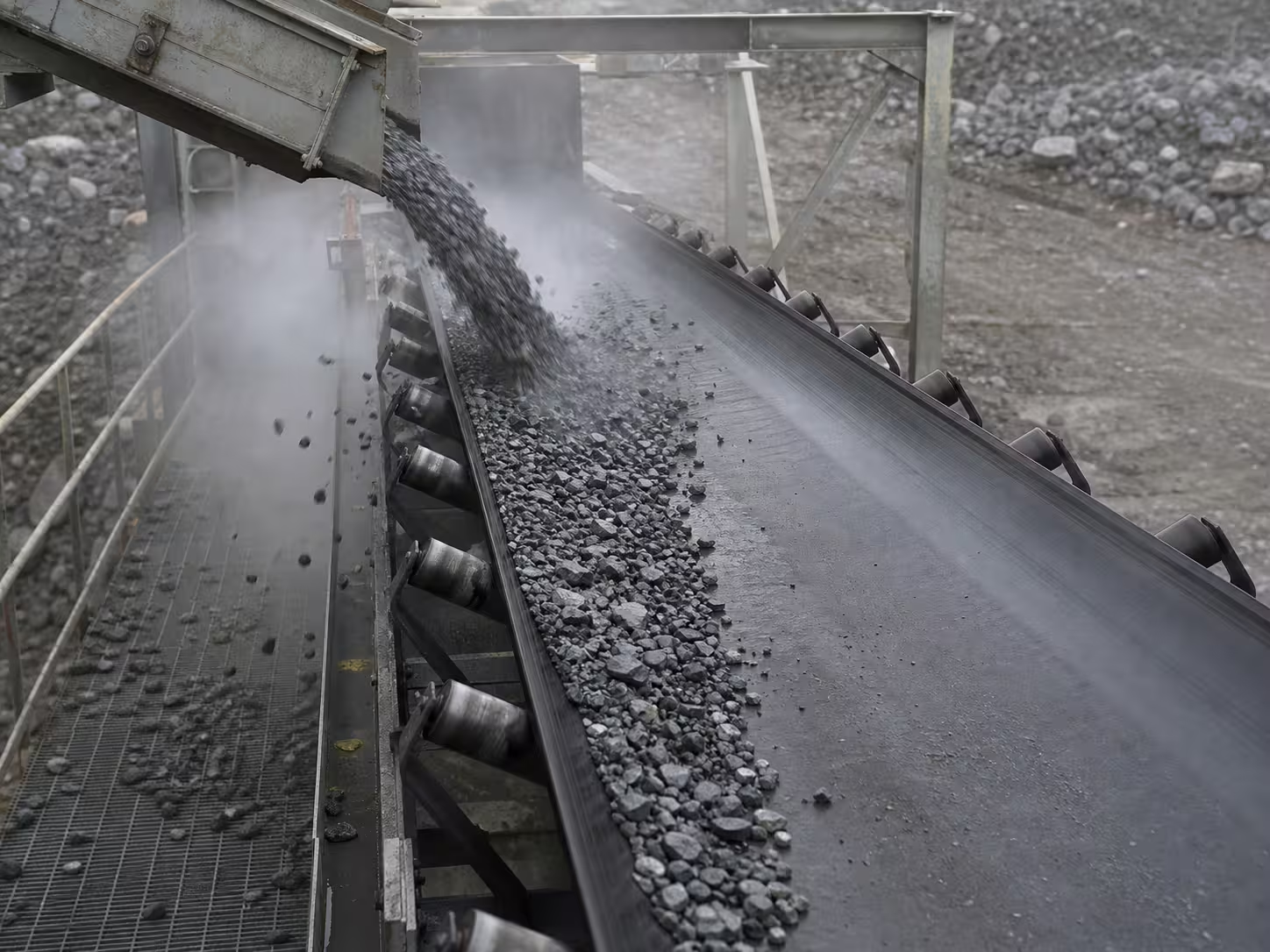
One word on safety, because it happens quickly during a hunt like this: clearing buildup, reaching into the chute, measuring at the edge, all of that only on a plant that is shut down and locked out. No hand is quicker than a running belt.
The fix: align, clean, centre, in that order
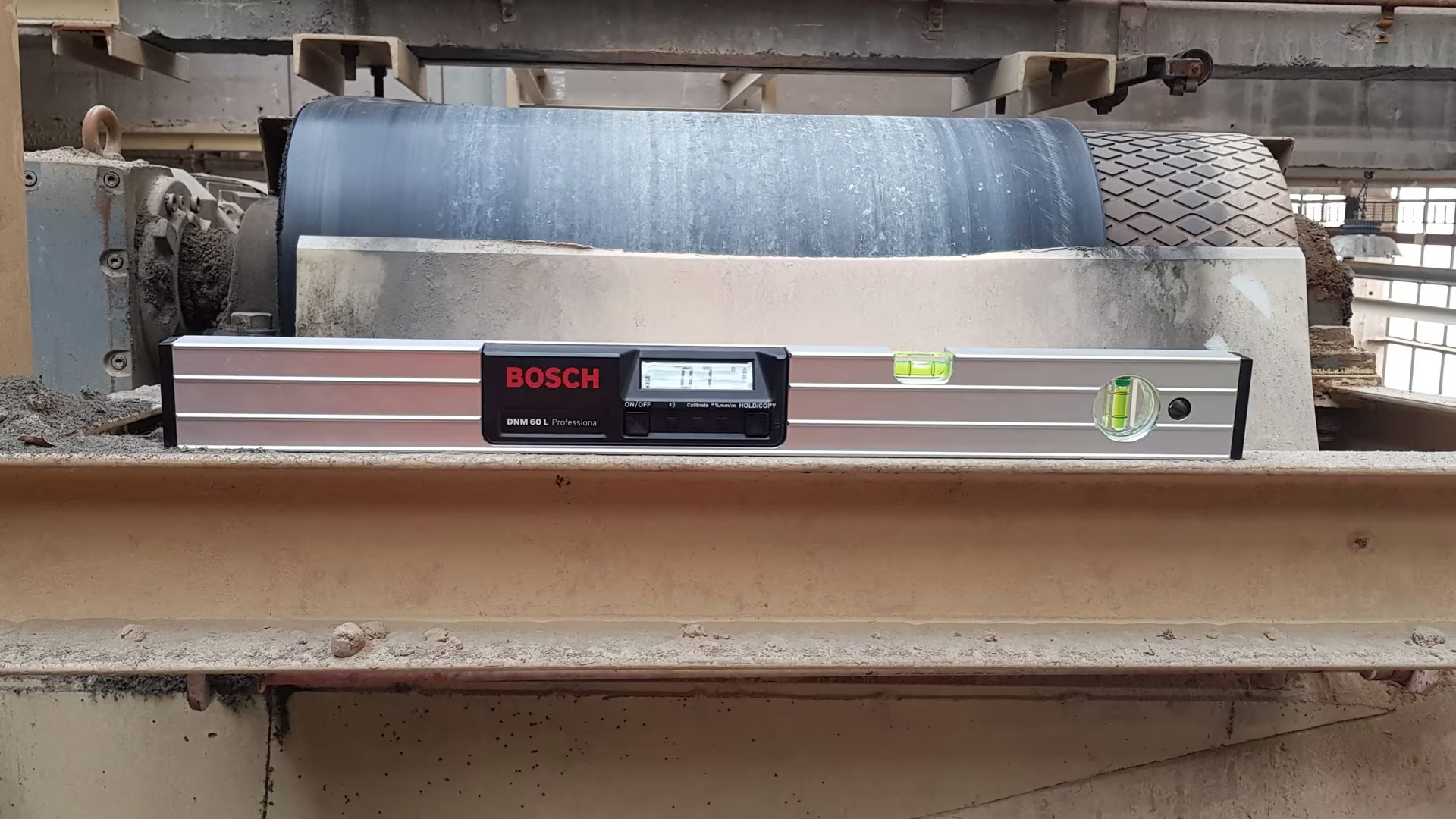
Once the cause is known, the fix is usually unspectacular. Mistracking is not a repair job, it is an adjustment job. Check that the pulleys sit square to the belt axis, align the idler sets, centre the loading, clear buildup off the rollers and pulleys, and correct the belt tension. Most of it is a folding rule, a string line and patience, not special tools. No magic. But it is craft.
Then adjust in small steps and give the belt time to settle after each change. Turn five stations at once and you will not know afterwards which change helped, and at the next bout of mistracking you are back to square one.
For plants that stay sensitive even with a clean baseline setup, there are self-aligning idlers, also called training idlers. One manufacturer describes how its system works like this, so the figures are product-specific and not an industry standard: the idler sits in place of an ordinary idler on the return run, right ahead of the tail pulley. Ideally the belt drifts sideways by no more than plus or minus 6 millimetres. Let it run about 10 millimetres to one side and the idler’s centre of gravity shifts, a brake pad grabs on one side, the roller turns at an angle to the running direction, and the friction of its rubber ribs steers the belt back to the middle.
There is just one thing you must not expect from a self-aligning idler: that it removes the cause. It is like the bumpers in a bowling lane. They keep the ball out of the gutter, but they do not make your throw any straighter. Paper over a skewed chute with self-aligning idlers and the one-sided force stays in the system; the idler just keeps pushing back against it, day after day.
On long conveyors, or ones you cannot see along easily, continuous monitoring is worth a look as well. Sensors pick up mistracking and misalignment in real time, before either turns into a costly stoppage. The classic visual inspection on a walk-round keeps its value, but it has a built-in weakness: between two checks sits a window of time, and that is exactly where a problem quietly carries on developing. How often you should check depends on the plant; a blanket figure for it would be a guess, not something documented.
What mistracking does to the belt edge
With mistracking, a frayed edge is almost always a result, not a cause. When the belt runs off track, the edge rubs against the steelwork, frays, tears away piece by piece, or in the worst case gets ground knife-sharp. So looking after the edge means first of all getting the tracking right. Everything else is cosmetic treatment of a symptom.
How sensitive an edge is depends on how it is made. According to one belt maker’s technical bulletin, there are three versions: the full-rubber edge, the cut and sealed edge, and the plain cut edge. The full-rubber edge is a strip of rubber 5 to 15 millimetres wide along the belt margin, with no fabric reinforcement. Structurally it brings no advantage, and with mistracking it is especially vulnerable: unreinforced rubber cuts away easily, and when it is damaged, large chunks often tear off at once. Steel-cord belts still come only with a full-rubber edge, because there the edge protects the steel cords from moisture and corrosion.
Sealed cut edges form when the friction heat of rotating cutting blades fuses the rubber and the fibres of the carcass, the load-bearing core of the belt, together at the edge. That keeps moisture out of the carcass better and makes this version the tougher choice for wet conditions and longer storage outdoors. For you it means this: if an edge frays again and again, check the tracking first and the edge construction only after that. And where the battered edge already has cracks running into the belt, that is a different chapter.
- Mistracking is a symptom. Find the cause first, then centre the belt, or you will be readjusting every week.
- The most common causes: off-centre or angled loading, pulleys and idlers out of square, wrong belt tension, buildup.
- Watching beats adjusting: compare empty against loaded and note where the mistracking first shows. A fixed spot points to the plant, a travelling one to the belt.
- Left alone, mistracking destroys long stretches of belt, grinds the edge knife-sharp and attacks the steelwork.
- Self-aligning idlers are a sensible long-term safeguard, but they do not replace fixing the cause.
- Edge damage is mostly follow-on damage. If you want to protect the edge, get the tracking right first.
Frequently asked questions
Why does my conveyor belt always run to the same side?
A constant direction points to a constant cause: an idler or pulley sitting at an angle, a warped structure, or loading that is off-centre the same way every time. The belt runs towards whatever it touches first and where the greater friction holds it back. Compare the run empty and loaded, and you will know whether the cause sits in the plant or in the loading.
Can I fix mistracking myself, or do I need a specialist?
Aligning, cleaning, centring the loading and correcting the belt tension are normal maintenance work, but only on a plant that is shut down and locked out. What matters is the method: one change at a time, with observation time in between. If the mistracking keeps coming back despite a clean baseline setup, a systematic belt tracking analysis with experienced help pays off.
How much does the loading point matter for mistracking?
A great deal. If the material lands off-centre or at an angle, it shoves the belt a little to the side with every load. A belt that runs straight empty and only mistracks once loaded almost always points to the loading. Short belts are especially sensitive to that sideways push.
What are self-aligning or training idlers, and when are they worth it?
They are idlers that turn at an angle on their own when the belt drifts to one side and steer it back to the middle through friction. They earn their keep as a permanent safeguard on plants that react sensitively to changing loads. Fit them only after the real cause has been fixed, or they merely paper over the problem.
How fast does unnoticed mistracking destroy the belt?
There is no honest blanket number for that. What is documented is that a fast-moving edge can cut through steel brackets surprisingly quickly, and that unnoticed mistracking destroys long stretches of belt. The longer it runs, the more expensive it gets. So act at the first sign, not once the edge is already damaged.
The Conveyor Belt Calculator recalculates cross-section, resistances and drive power, free in the browser and without signing up.