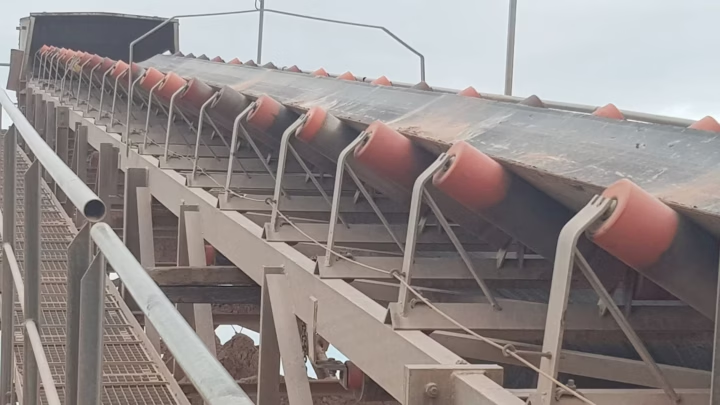
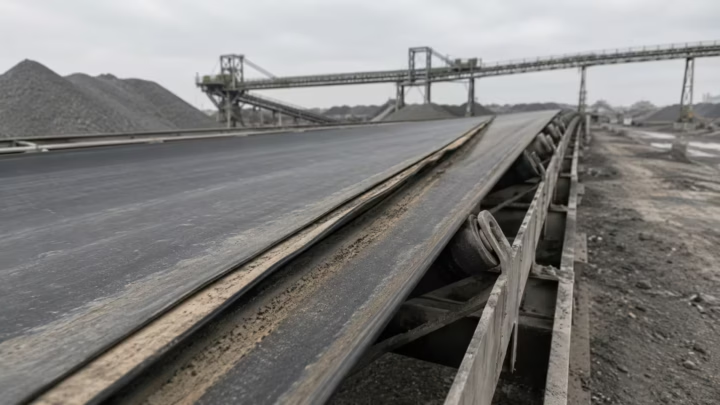
At a packaging plant the belt had torn, the line stood idle, and back in the office the shift was pushing for a restart. As I came in, two routes lay on the table: vulcanise the belt or join it mechanically. One gives you the most durable seam but costs two shifts of downtime. The other has the belt running again straight after fitting, but it rarely lasts as long. Neither was wrong. The only question was which one suited this operation on this day.
The three ways to make a belt endless
A conveyor belt arrives as an open length and has to be closed into an endless loop. There are three basic methods for that, and once you understand the difference you are already halfway to the decision. Hot vulcanisation, cold vulcanisation and mechanical fasteners. Everything else is a variation on those three.
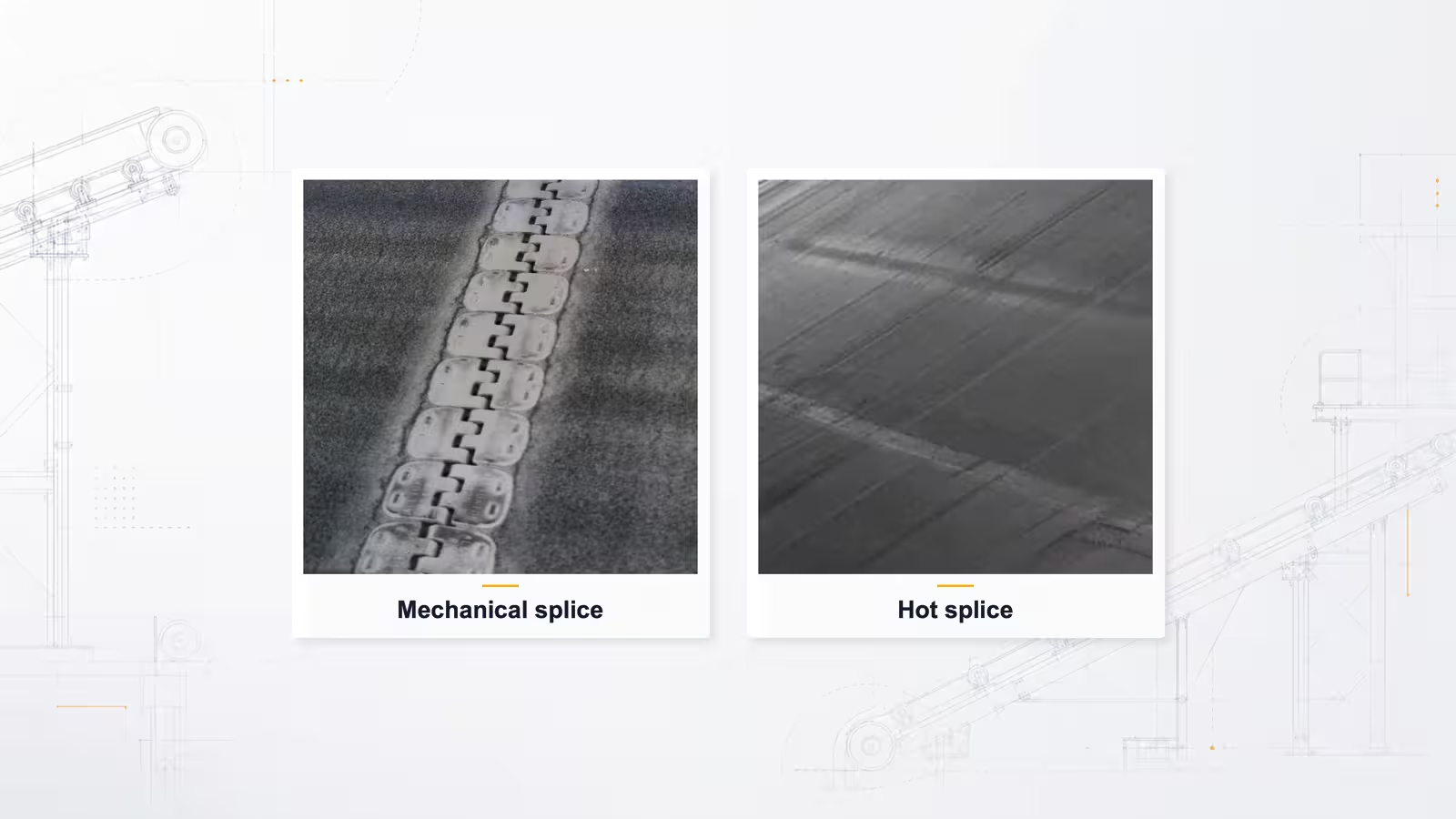
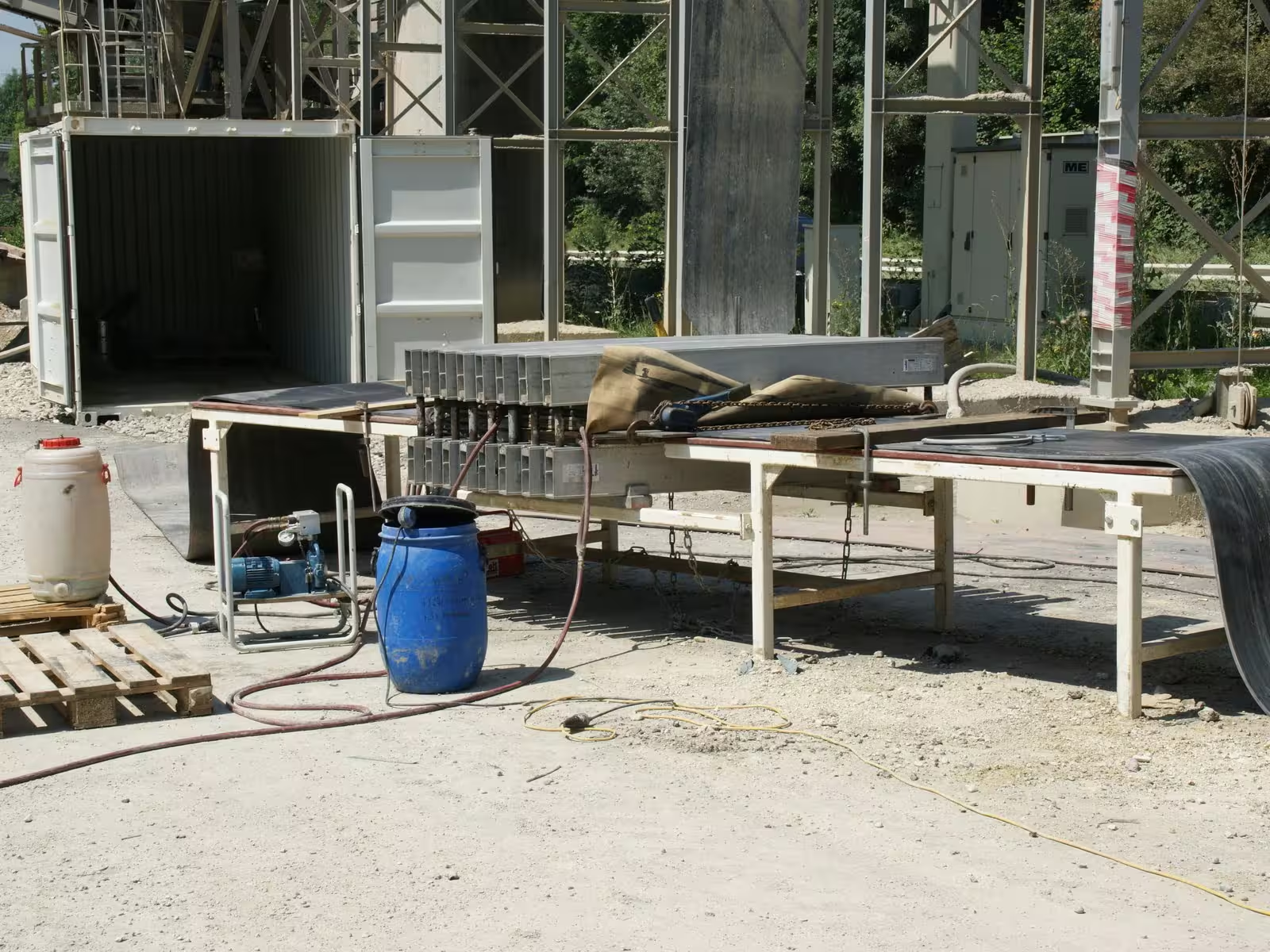
With hot vulcanisation, the prepared belt ends are fused into one piece under heat and pressure in a vulcanising press. One maker of vulcanising presses gives 140 to 155 degrees Celsius and over 6 to 10 bar of platen pressure as a rough guide, and the finished splice has to cool to 70 to 80 degrees Celsius before the press is opened, or bubbles form and the fabric plies separate again. Those are manufacturer figures, not a standard, but they show why this is no job to squeeze in between other tasks. A vulcanised seam fuses both ends into a single piece.
Cold vulcanisation, often called cold bonding, needs no press. Instead of heat it works with a special adhesive that cures at ambient temperature. According to manufacturer data that takes 12 to 24 hours, and high humidity drives bubbles into the splice and weakens the bond. Cold bonding is the alternative wherever a press cannot reach or the belt is too small for one.
The mechanical fastener, finally, clamps the belt ends together like a sturdy belt buckle. Hinges, plates or clips made of steel, stainless steel or plastic bite into both ends and are either bolted or driven in. Quickly closed, ready to take load at once, but the join stays visible for what it is. Which method suits which belt is not a matter of taste: steel-cord belts are hot-vulcanised as a rule, multi-ply fabric belts can also be joined cold, and where the belt is too narrow for the press, the cold splice is what remains; if it has to be quick instead, the mechanical one.
The honest comparison: downtime, strength, service life
Now to the numbers the decision usually hangs on. One warning first: the strength and service-life values below all come from manufacturers, and those have a vested interest in their own method. Take them as a ballpark, not as a calibrated reading. Reliable, manufacturer-neutral percentages simply do not exist in this field, and anyone who tells you otherwise is selling.
| Criterion | Hot vulcanisation | Cold vulcanisation | Mechanical fastener |
|---|---|---|---|
| Downtime until restart | Long: about two shifts on average, large seams up to about 24 hours | Curing 12 to 24 hours | Ready to run right after fitting |
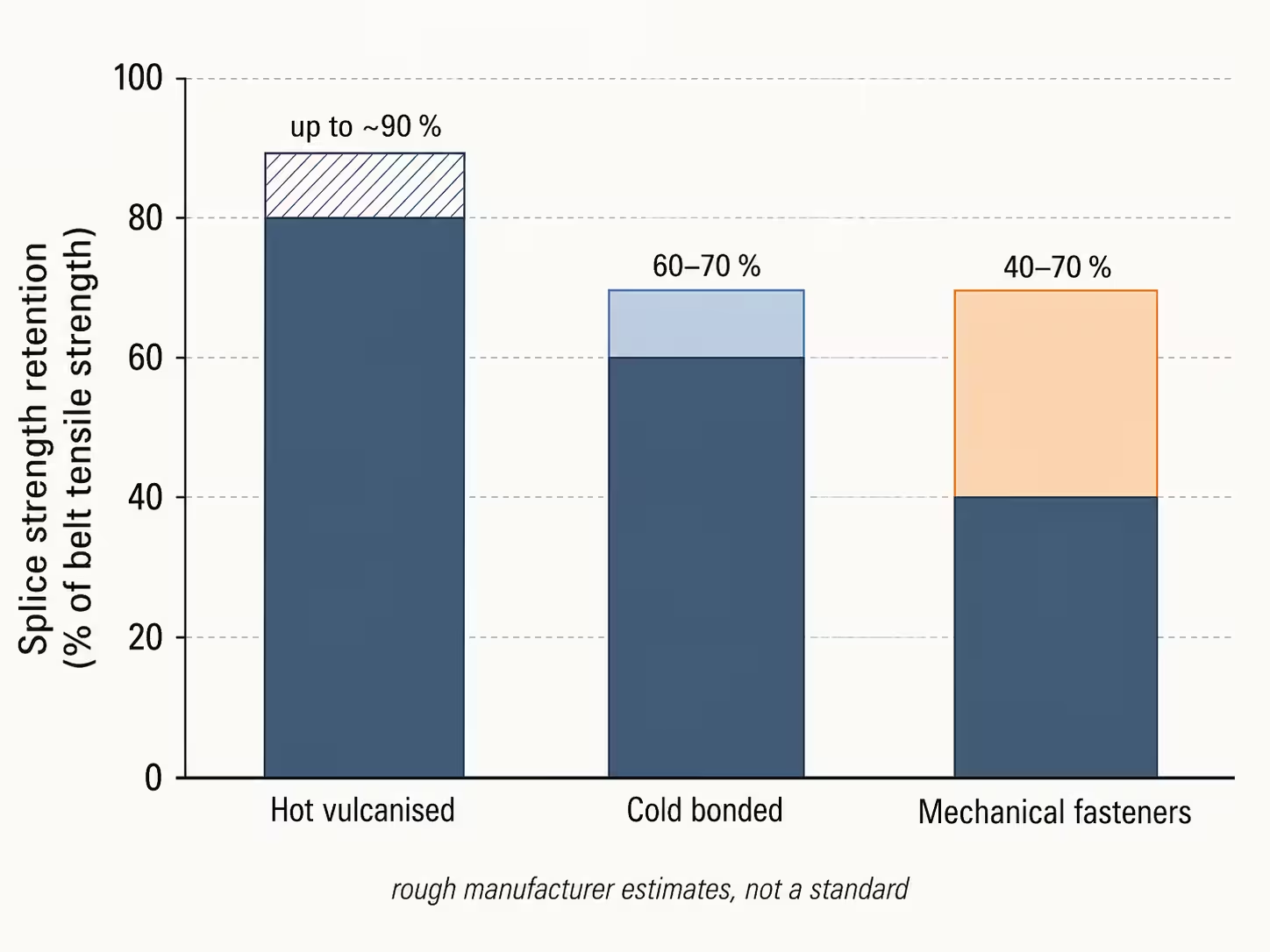
| Strength retention (per manufacturer) | up to around 90 percent of belt tensile strength | around 60 to 70 percent | around 40 to 70 percent depending on fastener type |
| Service life (per manufacturer) | often around 8 years, ideally as long as the belt | below that, with no consistent manufacturer figure | usually shorter than the belt |
| Behaviour at the scraper | smooth, scraper-friendly seam | smooth seam | can be hard on the scraper unless it is recessed |
| People and equipment | trained crew, press, power, space | expertise, adhesive system, clean surface | often your own crew, simple tools |
| Environment | clean, dry, warm needed | clean and dry needed | stands up to harsh conditions |
Read the table not as a ranking but as a trade-off. Hot vulcanisation buys you the highest strength and the longest service life, and it pays for that in downtime. One provider puts professional splicing at about two working shifts on average: one to prepare, buff and clean, one to assemble and vulcanise. Small seams can be finished in about four hours, large ones take up to 24 hours according to the same source. A maker of mechanical fasteners, by contrast, reckons on downtime of at least eight hours, because the vulcanising chemicals need several hours to cure, and sets the instant start-up of its own fastener against that.
What such a stoppage costs depends on the operation. For the packaging industry one manufacturer cites downtime costs on the order of hundreds to thousands of US dollars per minute. That is an extreme example, and reckoned in dollars, not euros, but it makes clear why in some plants the quick splice is the economically right one, even when it stays the technically weaker choice. Scale that up to a full shift for your own plant. That figure belongs next to the strength and service-life values when you choose the method.
Why the manufacturers argue over the percentages
Lay two brochures side by side and you start to wonder. One says vulcanising costs you strength, the other says its mechanical fastener costs none at all. Both are right, and both are selling.
Specifically, one maker of mechanical fasteners states that a correctly fitted mechanical splice does not reduce belt strength at all, while vulcanisation costs a whole fabric ply even when it is done cleanly. A press manufacturer, in turn, puts that very vulcanisation at up to 90 percent strength retention, meaning the share of belt tensile strength the splice still carries, and the mechanical splice at 40 to 70 percent. There is no common denominator to be found here, and you should not go looking for one.
In practice, the calm conclusion is this: treat every percentage figure as what it is, a manufacturer’s claim with a return address on it. On paper every method looks superior the moment its own maker supplies the numbers. In service, what counts is whether the splice suits your belt, your load and your plant. Ask the operation next door that runs your kind of material about their experience.
The splice and the scraper
One point is easy to overlook when you pick the method, even though it makes itself felt long after fitting: the scraper. A smooth, vulcanised seam passes under the scraper as if it had never been there. A mechanical fastener that stands proud of the belt surface does not.
Such a raised fastener sits at exactly the height where the scraper blade works. On every revolution the scraper hits the edge, and on every revolution it loses a little of its blade. After a few weeks the scraper cleans worse, and nobody knows why. That is why scrapers and mechanical fasteners are a poor match in most plants, and where both have to work together, the fastener needs to be let into the belt, recessed, so that it sits flush with the surface. Suppliers point out explicitly that recessing a mechanical splice markedly improves how well it gets on with the scraper. It is not a full substitute for a smooth seam: if you have to get the belt reliably clean, you are better off deciding the splice question along with it.
Which one, and when? Deciding by plant and urgency
The real question is: which method fits this case? Four things give the answer: the belt type, the plant, the environment and the urgency.
The belt type already narrows the field. As a rule a steel-cord belt calls for hot vulcanising, because only that transfers the tension cleanly through the cords. A multi-ply fabric belt leaves more room, and here a cold splice is a serious option too. If the belt is too narrow or too tightly built for a press, hot splicing is off the table anyway, and cold or mechanical is what is left.
The environment gets a say too, and a stricter one than many would like. Vulcanising needs a clean, dry, reasonably warm setting. Chemical residues, too much moisture or temperature extremes create kinks or bubbles and weaken the seam. Vulcanising is a bit like spray-painting. In wet, cold or dusty conditions it comes to nothing, however good the person at the press. In an open pit in November, in the open air, the quick mechanical splice is therefore often the only one that really holds under those conditions.
And then the urgency. If the plant can stand idle for two shifts, vulcanising gets you the most durable seam. If it cannot, the quick splice is the right one, even if it will not last forever. The packaging plant from the start stood at exactly this point: belt torn, production breathing down its neck. We joined it mechanically and kept the belt running, and at the next planned stoppage it was vulcanised with time to do it properly. Not pretty, but honest, and above all affordable. The mechanical splice here was not a compromise made for convenience but the right answer to the urgency.
Why splices really fail
Most splices do not fail because the method was poor, but because the workmanship was off. That holds for hot, cold and mechanical alike.
The usual suspects are always the same: belt ends that were not cut square. Covers skived wrongly or unevenly while the ends are prepared, so the splice does not bond equally well everywhere. And dirt, oil or moisture on the bonding face. If the temperature is off during vulcanising, the seam can open again after only a few weeks, and bubbles after vulcanisation show that something went wrong with the splice. Faults like that can be spotted on the finished seam. You just have to look and know what you are seeing.
But there is a kind of failure that no splicer can be blamed for, and it is expensive because it is easy to go hunting for it in the wrong place. At a quarry they had the same splice re-made three times in one year and cursed the tradesman every time. The third time, they called me in. The seam was not the problem. The pulley diameter was too small for the stiff belt, and the splice was overstressed on every pass around the pulley. Re-make the seam three times without looking at the pulley and you patch the same tyre three times while missing the nail in the tread.
Behind that sits a sober rule from belt design: a tensile strength chosen even one step too high, meaning a belt from the next strength class up, normally calls for a pulley diameter 25 percent or more larger. Leave the diameter as it is, and the overload migrates into the splice. Recurring failure at the same spot is therefore rarely bad luck and rarely poor craft. It is a signal from the system. Cause first, then the seam.
Checking what you can barely see, and the rules around it
A mechanical splice you can inspect on your walk-round. A plate sitting loose, a missing clip, something standing proud, a trained eye picks that up. A vulcanised seam makes it harder for you. It is almost impossible to judge with the naked eye, and the first signs that it is letting go are nearly invisible. Often it only shows once the seam tears. That is no argument against vulcanisation, but it is an argument for having it done cleanly and for keeping the splice in view at every opportunity.
For the tear strength of multi-ply fabric belts there is a recognised test method in ISO 505, and requirements in ISO 14890 for how the splice is made. Both give test procedures, but no generally valid minimum percentages for splice strength. So the strength figures stay a manufacturer’s business. Anyone who wants a solid statement about their particular seam cannot avoid a test on their own belt.
And because the question comes up regularly: in Germany the operation and recurring inspection of belt conveyors for bulk material fall under the German Industrial Safety Ordinance (BetrSichV), while the structural requirements for fixed belt conveyors are governed by DIN EN 620. Neither prescribes fixed inspection intervals specifically for splices. One pointer from the rulebook is worth having anyway: if a plant needs maintenance, inspection or cleaning work more than once a month and the spot cannot be reached from the ground, secured access must be provided. So if you regularly have to rework a hard-to-reach seam, you need secured access there as well. That too belongs in the reckoning of which splice is the right one at this spot. Where a compromised splice or cover already has cracks running into the belt body, a different chapter begins in any case.
- There are three ways to splice a belt: hot vulcanise, cold bond or join mechanically. None is better in principle, each fits a different case.
- Vulcanising gives the highest strength per manufacturer (hot up to around 90 percent) and the longest service life (often around 8 years), but it costs about two shifts of downtime on average.
- Mechanical fasteners are ready to run at once and cheap, but usually do not last as long as the belt and can be hard on the scraper if they are not recessed.
- All strength and service-life percentages are manufacturer figures. Two suppliers openly contradict each other. Take the numbers as a ballpark.
- Decide by belt type, environment and urgency. Steel cord calls for hot, fabric can also go cold, and under time pressure or in the wet, mechanical often wins.
- The most common failure cause is the fitting, not the method. And recurring failure at the same spot is a system signal, usually a pulley diameter that is too small.
Frequently asked questions
Is vulcanising or a mechanical splice cheaper?
On purchase price, and above all on downtime, the mechanical splice is almost always cheaper. It is ready to run at once and often needs no more than your own crew and simple tools. Vulcanising costs trained people, equipment and on average about two shifts of downtime. Whether it works out dearer overall depends on what an hour of downtime costs in your plant and how long the splice has to last.
How long is the plant down for vulcanising?
Per manufacturer figures at least eight hours, because the chemicals need several hours to cure, and on average about two working shifts including preparation. Small seams can be finished in about four hours, large ones take up to 24 hours. On top of that comes the availability of trained staff. A mechanical fastener, by contrast, is ready to run again the moment it is fitted.
Do mechanical fasteners last as long as a vulcanised splice?
As a rule, no. Done properly, a vulcanised splice ideally lasts as long as the belt itself, in practice often around eight years according to manufacturers. Mechanical fasteners usually wear faster than the belt and are serviced or replaced along the way. On strength retention, manufacturers quote up to around 90 percent for hot vulcanisation and 40 to 70 percent for mechanical fasteners, though the suppliers clearly contradict one another here.
When should you use a mechanical splice instead of vulcanising?
Whenever the plant cannot be down for long, when the setting is too wet, too cold or too dirty for vulcanising, or when the belt is too narrow for a press. As a quick stopgap after a failure, the mechanical fastener is often the right choice too, until the next planned stoppage allows unhurried vulcanising. Steel-cord belts, on the other hand, almost always call for hot vulcanising.
Why does my belt splice keep tearing at the same spot?
When the same splice fails repeatedly, it is rarely the workmanship and usually the plant. The most common cause is a pulley diameter too small for the belt’s stiffness, so the seam is overstressed on every pass. Ends that were not cut square, wrongly skived covers or contamination weaken the splice as well. Check the cause before you have it re-spliced for a third time.
The Conveyor Belt Calculator works through motion resistances and drive power and suggests a belt type, free in the browser and without signing up.